E-Com Leadership Program | Evaluation Rationale
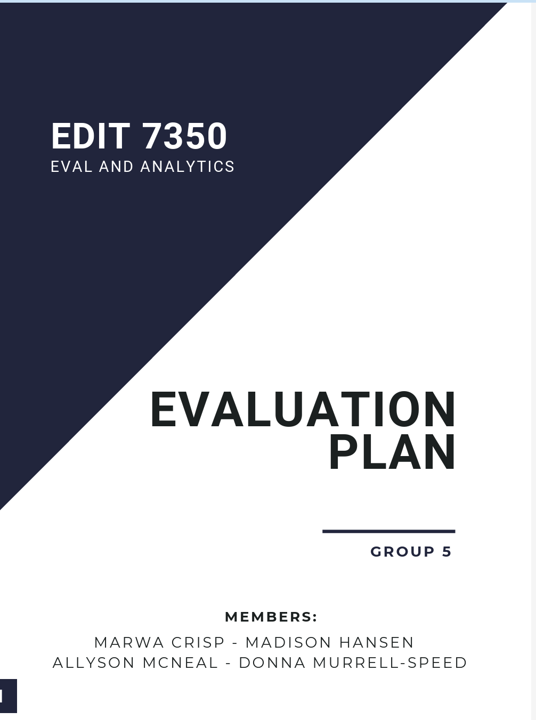
This rationale documents the evaluation design and instructional analysis for the E-Com online Leadership Program. The process included independent analysis of program materials, creation of a logical model, and development of a mixed-methods evaluation plan aligned with stakeholder needs, learner outcomes, and organizational goals.
Project Overview & Stakeholders
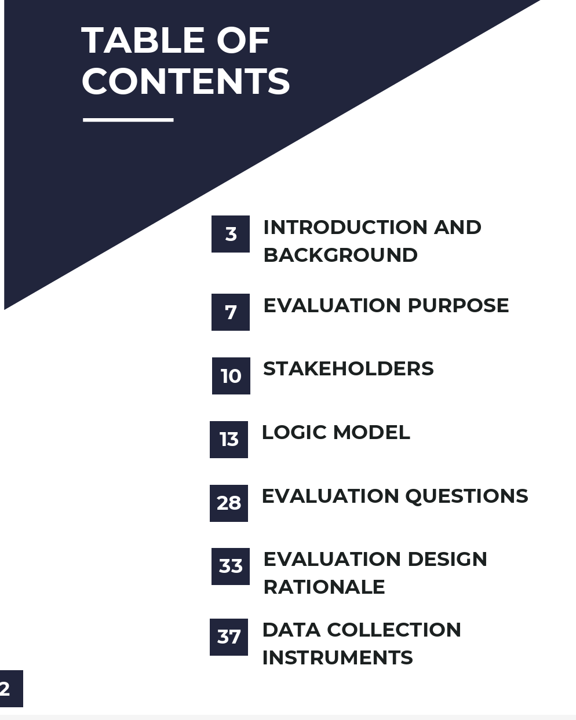
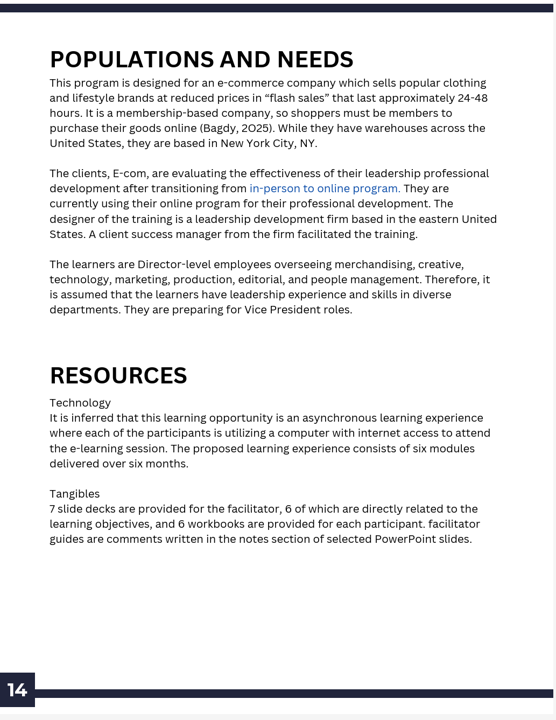
The client, E-Com, requested an evaluation to assess the effectiveness of their online Leadership Program and determine whether it should continue in its current format. Stakeholders included Director-Level Employees (learners), Developers, Facilitators, Managers, and the E-Com Executive Leadership Team. Each group brought unique priorities, from learner engagement to organizational impact and leadership effectiveness.
Logical Model & Independent Analysis
Independent analysis included learner workbooks, facilitator guides, and slide decks. A logical model mapped inputs, activities, short-term outputs, and long-term outcomes. Inputs included program resources, digital content, and facilitator supports. Activities included module objectives, interactive exercises, and reflection tasks. Outputs captured engagement and skill acquisition, while outcomes focused on leadership effectiveness and organizational performance.
Needs Analysis & Stakeholder Alignment
Learner needs included high engagement and relevance; facilitators required alignment with outcomes; managers needed assurance objectives were met; executives focused on organizational impact. The evaluation rationale aligned measurement strategies with stakeholder priorities and program objectives.
Evaluation Design & Mixed-Methods Approach
Evaluation questions addressed learner- and organizational-level outcomes. A mixed-methods approach combined qualitative data (interviews, focus groups, open-ended surveys) with quantitative measures (assessments, rating scales). This alignment ensured evaluation strategies were both rigorous and relevant.
Impact & Reflection
The logical model and evaluation design provided a systematic framework for assessing program effectiveness. Collaboration in developing evaluation instruments ensured rigorous measurement of outcomes. This process demonstrates how independent analysis, stakeholder alignment, and mixed-methods evaluation can drive evidence-based instructional decision-making and organizational improvement.