Design and Development

Artifacts that showcase the creative, iterative, and messy process of designing and developing instructional solutions.

Working images:

Human-Centered Design in STEAM: An Asynchronous Design Sprint in Articulate Storyline

Course: EDIT 6200E – Designing Interactive Learning Environments
Instructor: Dr. Bethany Woods
Industry: K-12 Education, Instructional Design, EdTech, STEAM Learning
Tools: Articulate Storyline, AI Simulation Tools, PhET Interactive Simulations, HTML/CSS Embeds, Adobe Color
Responsibilities: Instructional design and development of an interactive Storyline module; creation of AI-driven scenarios and branching navigation; integration of human-centered design principles; development of interactive simulations and multimedia learning assets; iterative design refinement and user experience optimization.

This project represents a full design sprint that extends beyond an empathy module into a complete iterative learning experience. While empathy was embedded as a foundation, the design expands into branching scenarios, AI-supported interactions in multiple forms, and PhET simulations to deepen conceptual understanding through active exploration. The sprint emphasizes rapid iteration, prototyping, and learner-centered decision-making to translate human-centered design into a fully developed online learning environment. Overall, it demonstrates how empathy can evolve into a complete instructional system that integrates engagement, interaction, and applied problem-solving in digital learning spaces.

Project Context & Highlights

The Problem

Traditional science instruction often lacks opportunities for learners to engage with diverse user perspectives and apply content knowledge within authentic, real-world STEAM challenges.

The Solution

An interactive Storyline module was developed to integrate human-centered design, AI-driven character interactions, and scenario-based learning to support empathy and applied problem solving.

Key Highlights

  • Integration of AI-driven character interviews to model user perspectives
  • Scenario-based learning structure to support applied decision-making
  • Alignment of science content with real-world STEAM challenges
  • Use of multimedia and interaction design to enhance engagement and immersion
Design Decisions and Reflection

Overview

Overview

This artifact is an asynchronous Articulate Storyline project designed using foundational knowledge and user analysis gathered during earlier stages of the design process. It represents a fully developed digital design sprint created to support a school STEM certification initiative. Designed for K–12 educators, the experience guides learners through a human-centered design process grounded in empathy, inquiry, and real-world problem solving.

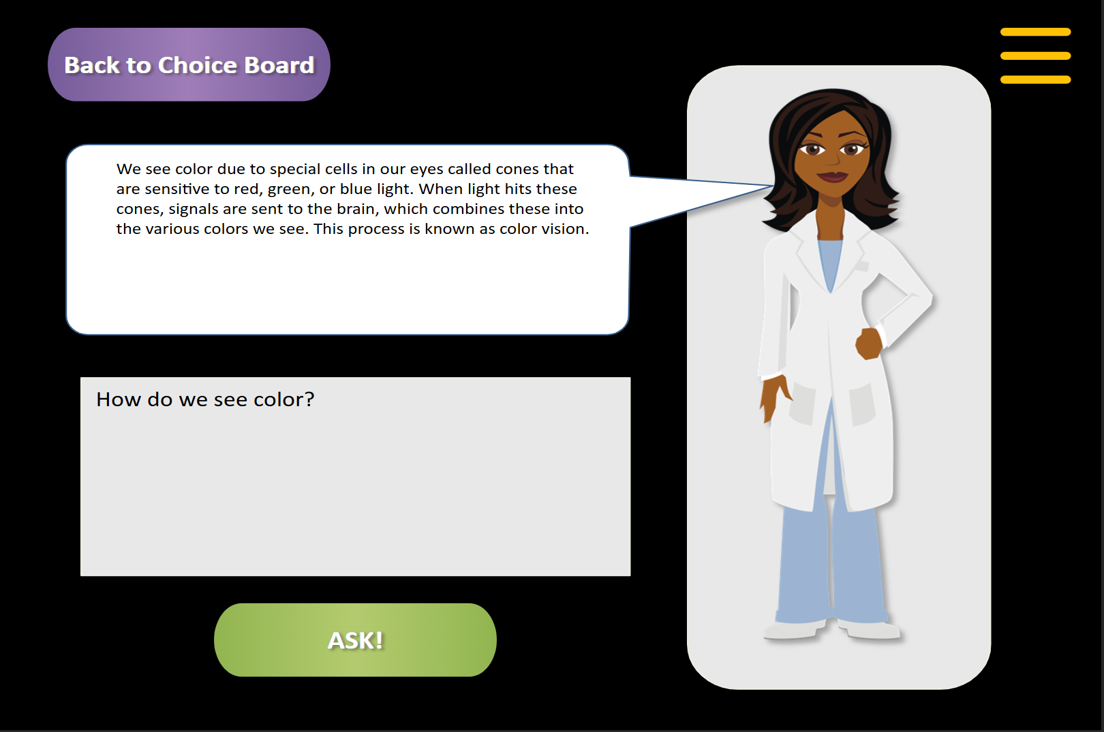
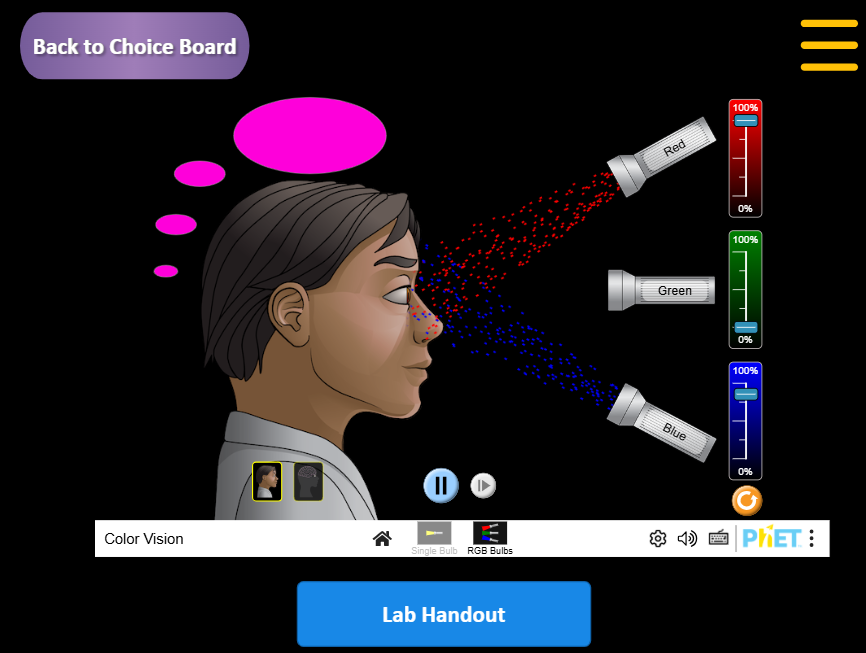
Building on the previous empathy module, this artifact continues the exploration of color blindness and the science behind how images and color are formed by the human eye while extending earlier design sprint features. The experience is structured as an inquiry-based investigation in which learners construct their understanding of scientific concepts in order to synthesize solutions for individuals with color vision deficiencies. Learners navigate the exploration phase through a choice board of activities, allowing for personalized pathways and self-directed learning.

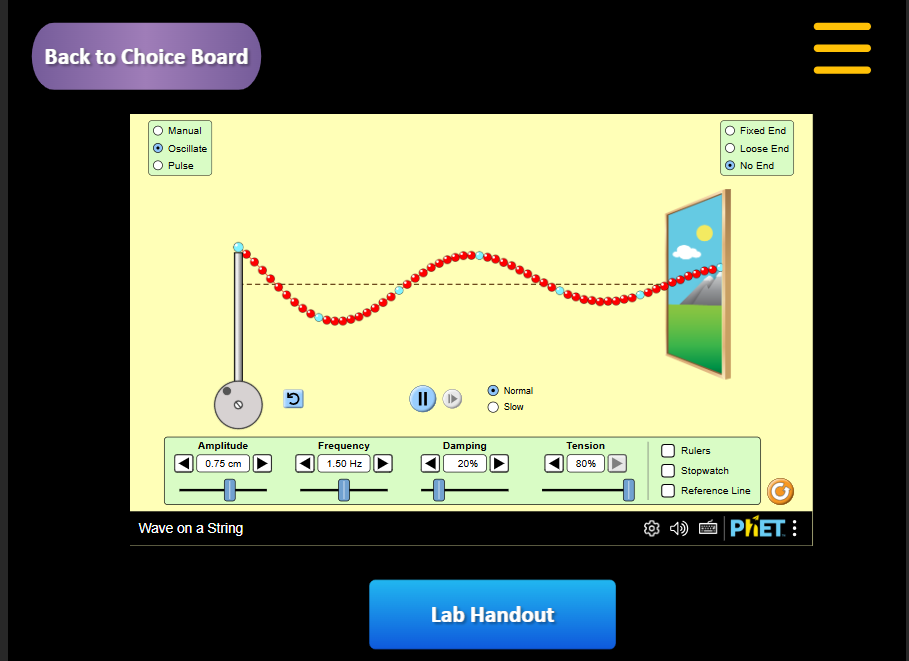
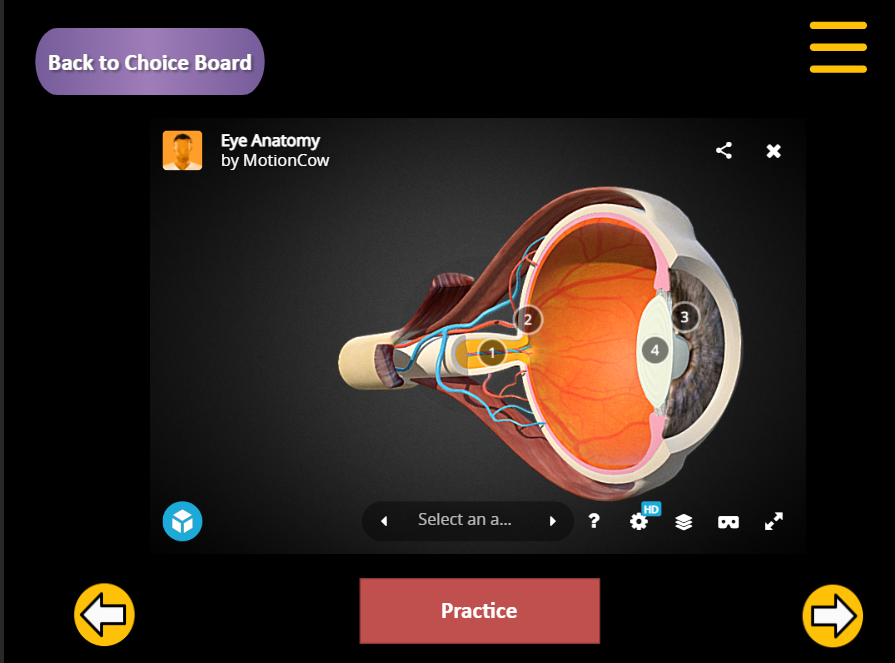
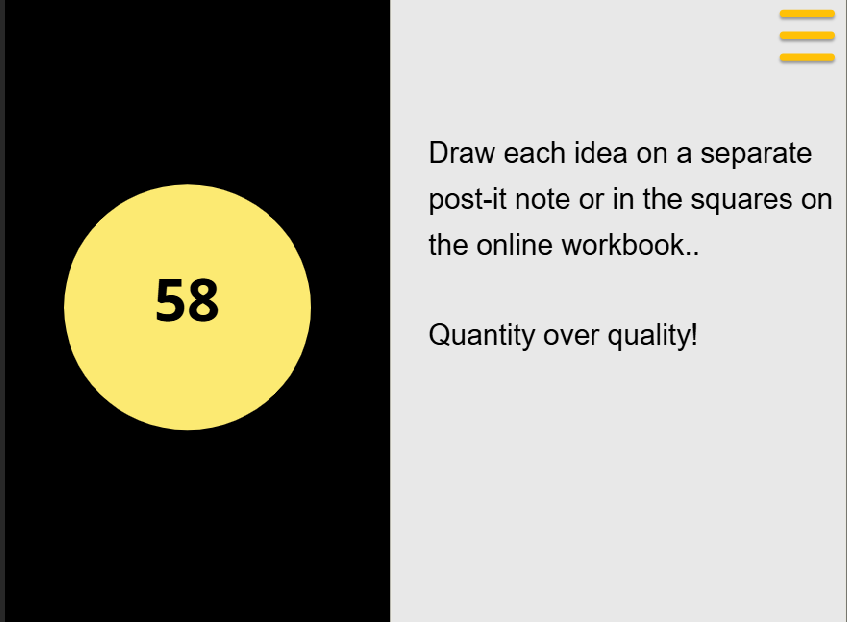
The learning experience integrates personalized interactions, AI-simulated scenarios, animations, and adaptive pacing to increase engagement and immersion. Advanced trigger-based interactions place learners in authentic design sprint activities while expanding upon earlier empathy-phase components. Features include AI-generated characters, simulated expert interactions with an optometrist, AI-supported video experiences, PhET Interactive Simulations, embedded interactive 3D models, and a built-in timer to support structured pacing and task completion.

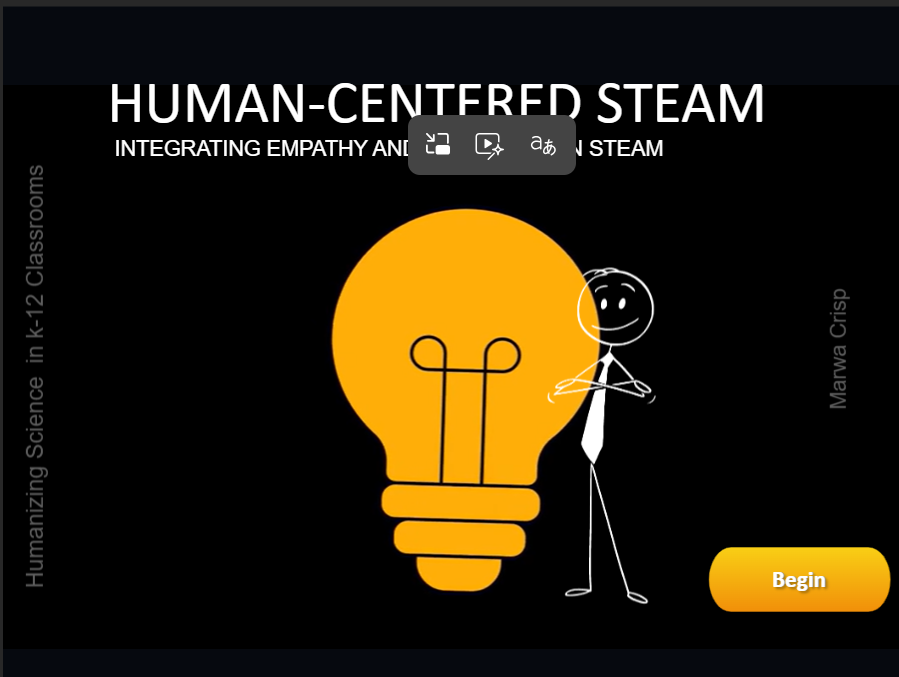
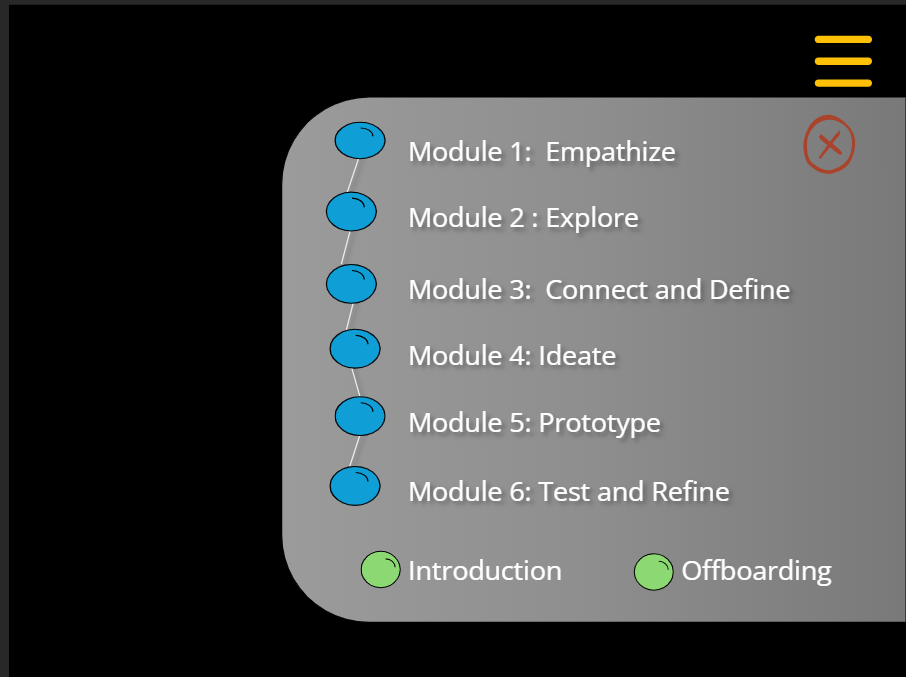
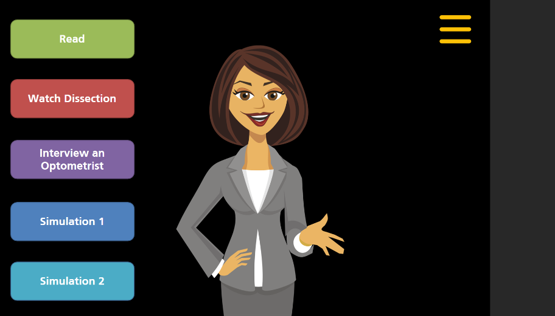
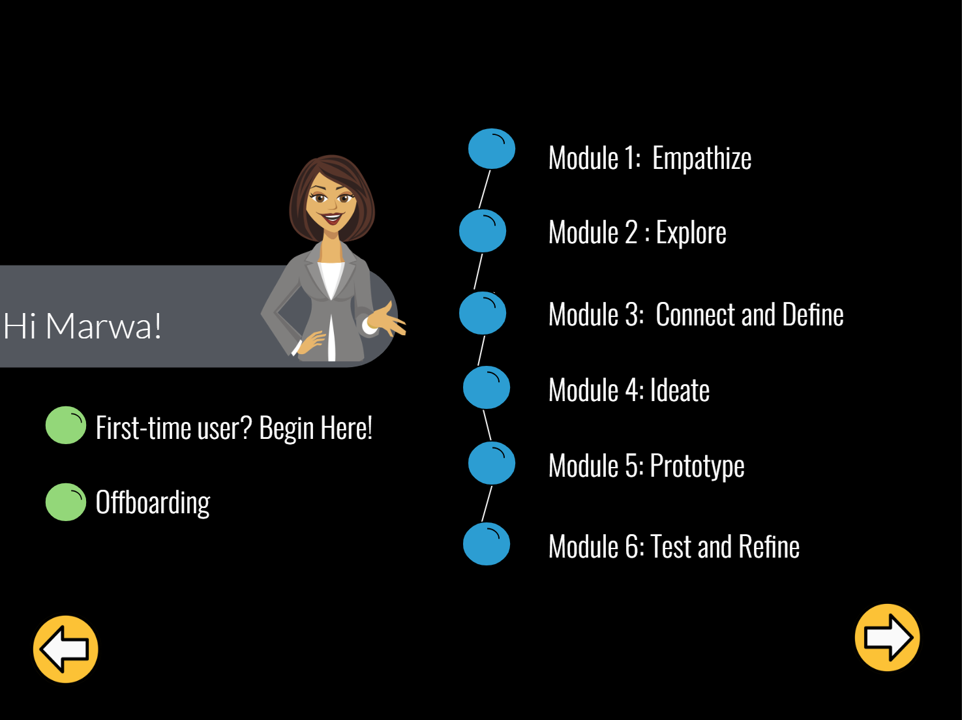
The module begins with an interactive onboarding experience where an animated guide introduces the course structure and navigation system. An interactive menu functions as a dynamic table of contents, allowing learners to move flexibly between phases of the design challenge.

Justification for Inclusion

This artifact was included within the theme because it demonstrates the intersection of human-centered design, inquiry-based science instruction, and immersive e-learning development. The project extends the empathy-focused learning experiences developed in earlier modules while showing how learners can apply scientific understanding toward authentic problem-solving situations.The experience reflects the broader theme of humanizing science education by encouraging learners to understand the perspectives and challenges of individuals with color vision deficiencies before developing solutions. Through inquiry, exploration, and reflection, learners engage in experiences that connect scientific concepts with empathy-driven design thinking practices.

Message design played a critical role in shaping the overall learner experience by helping establish the emotional tone, visual communication style, and accessibility of the project. The color palette was intentionally designed to support both engagement and usability throughout the online learning guide and Storyline module.

Figure 4 | Color Palette Map
Figure 5 | Module Cover Art

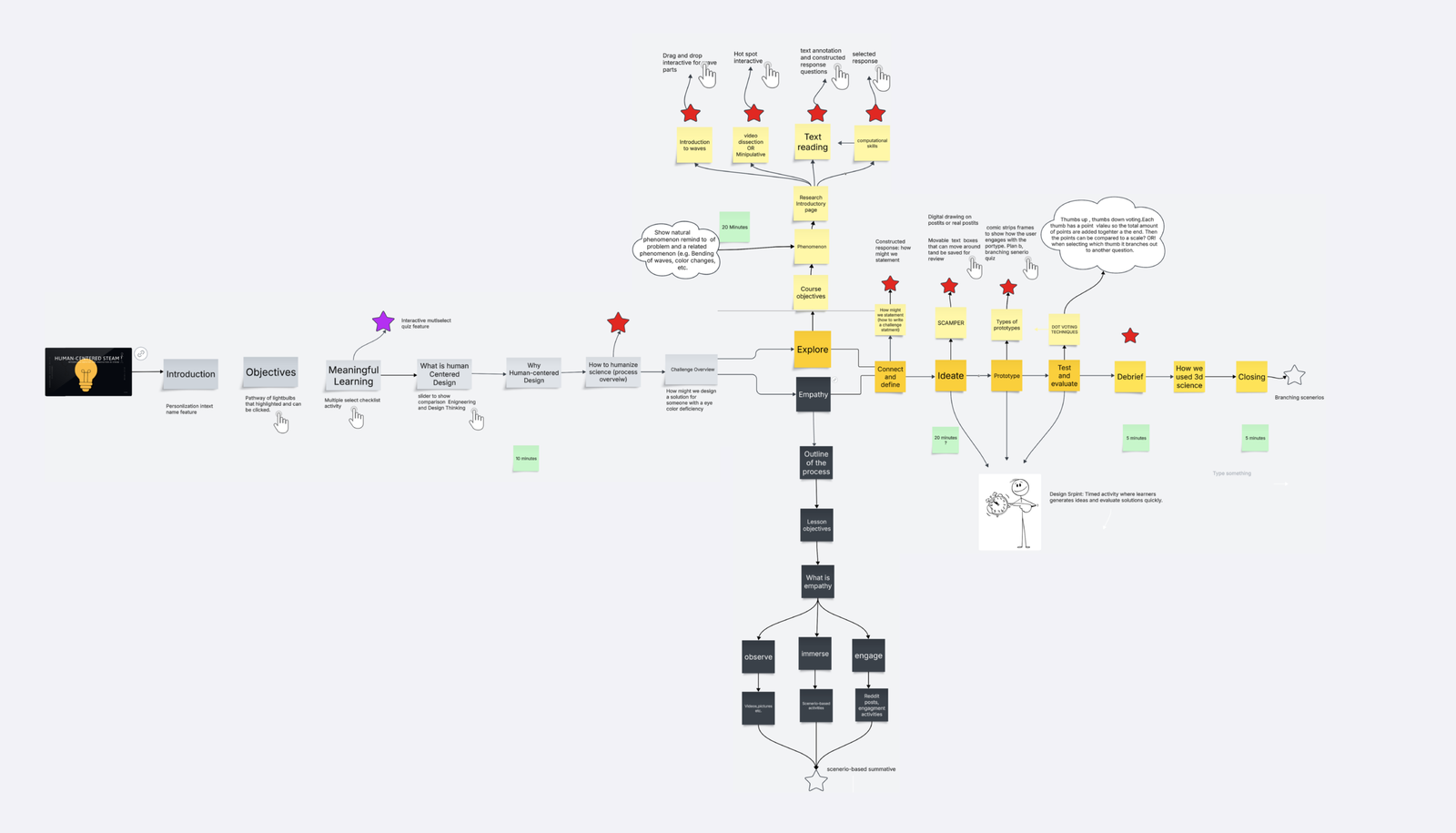
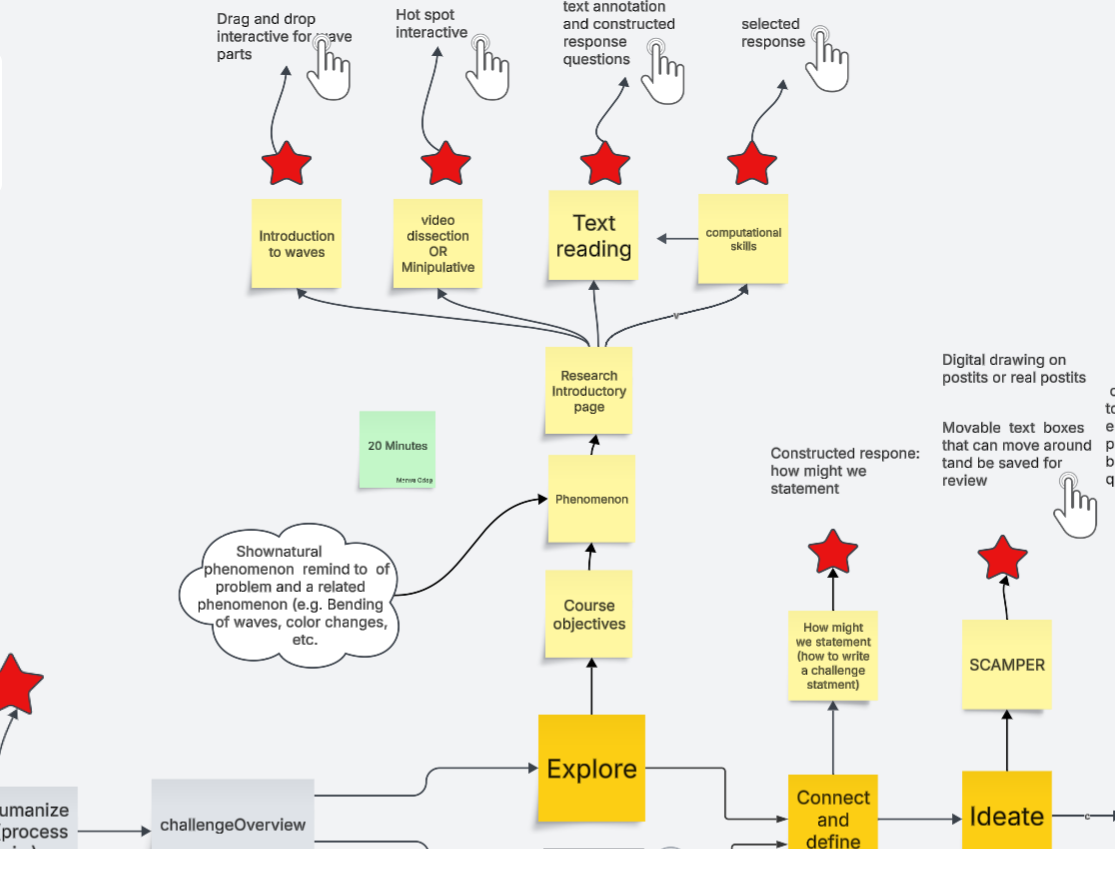
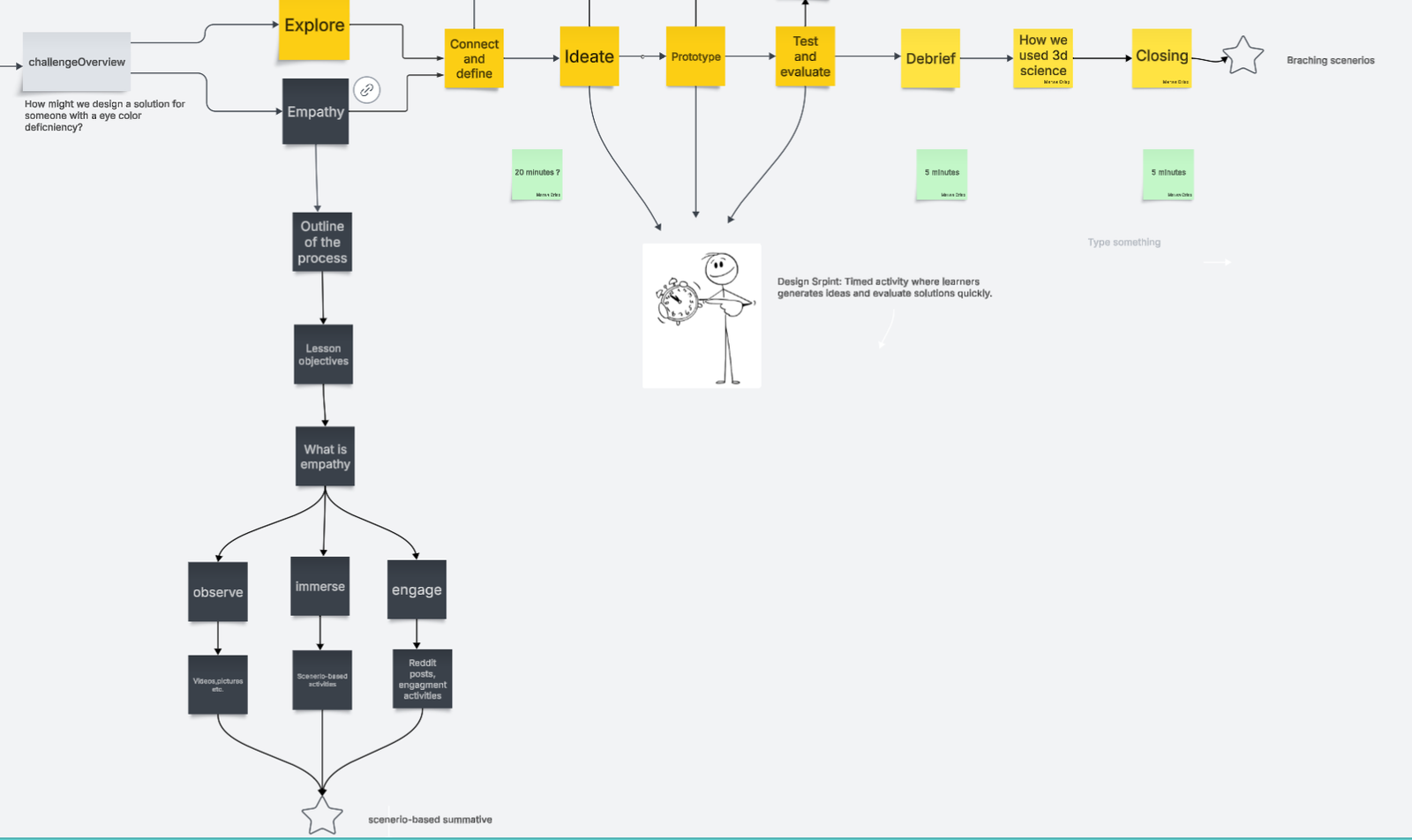
The artifact also represents the iterative instructional design process used throughout development. Prior to building the experience in Articulate Storyline, wireframes, and an instructional needs document was constructed to organize learner pathways, interactions, and pacing throughout the module. Snapshots are included below to show the branches of each of the section of the module. These planning artifacts supported the intentional alignment of instructional goals, inquiry activities, accessibility considerations, and learner experience design. The iterative prototyping process allowed interactions, branching pathways, and navigation systems to be refined before full development, demonstrating the application of user-centered and human-centered design practices throughout the project lifecycle.

Additionally, this artifact demonstrates how technology-enhanced learning environments can support engagement, accessibility, and learner autonomy. The integration of AI-supported interactions, simulations, branching navigation, and adaptive pacing illustrates how digital tools can be intentionally designed to create immersive and meaningful learning experiences grounded in instructional design theory.

A custom interactive navigation system was developed to allow learners to access and retrieve an expandable menu interface at any point throughout the module. Built within Articulate Storyline using advanced triggers, variables, conditional states, and layered interactions, the navigation structure functioned as both a dynamic table of contents and a learner-control system. The feature was intentionally designed to support learner autonomy, flexible pacing, and non-linear exploration while helping learners maintain orientation throughout the design sprint experience. Trigger-based animations and layered menu states were carefully implemented to create a seamless user experience that allowed participants to move efficiently between activities, revisit previous sections, and monitor their progression through the module.

× Enlarged Figure View

Online Learning Using LMS: Human-Centered Design and Iterative Course Development

Course: EDIT 7520E – Online Teaching and Learning
Instructor: Dr. Lauren Bagdy
Industry: K-12 Education, EdTech, Online Instructional Design
Tools: Brightspace LMS, Articulate Storyline, Branching Scenarios, PhET Simulations, Padlet
Responsibilities: Instructional design, LMS course development, learner analysis, iterative design improvements, interaction design, accessibility planning, translation of in-person activities to online formats, prototyping and evaluation of engagement strategies, development of branching scenarios and simulation-based learning experiences.

This project focused on creativity within human-centered design by emphasizing associative thinking, rapid ideation, and iterative design techniques in an online learning environment. The asynchronous LMS course was designed to help learners engage in collaborative problem-solving, reflective thinking, and creative exploration through structured digital activities and prototyping experiences. Interactive discussions, feedback systems, and design-thinking exercises were incorporated to translate hands-on innovation practices into an accessible online format. Overall, the project demonstrates how creativity and iterative thinking can be integrated into asynchronous instruction to create more engaging and humanized learning experiences.

Project Context & Highlights

The Problem

Online asynchronous learning environments often struggle to replicate the collaboration, creativity, and human interaction naturally found in face-to-face learning experiences.

The Solution

This course addresses this by grounding design in human-centered strategies, integrating collaborative digital workspaces, structured timers, reflective activities, and targeted interaction loops to foster continuous engagement and personalized interaction.

Key Highlights

  • Designed a three-week asynchronous LMS course focusing on creativity, associative thinking and rapid iteration
  • Translated traditionally in-person collaborative activities into digital learning experiences
  • Used reflective discussion boards, timers, and creative prompts to increase engagement
  • Demonstrated growth in translating instructional theory into practical online learning experiences
  • Explored strategies for humanizing asynchronous learning environments through collaboration and personalized interaction
Design Decisions and Reflection

Process Overview

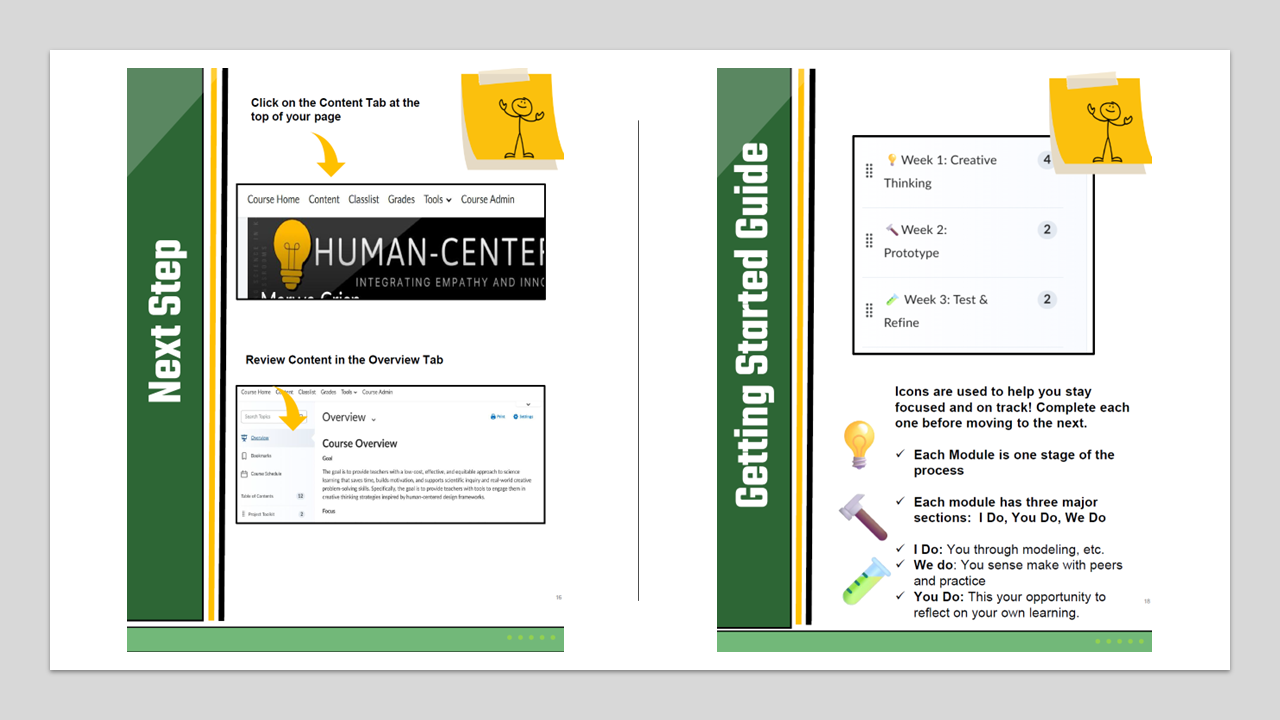
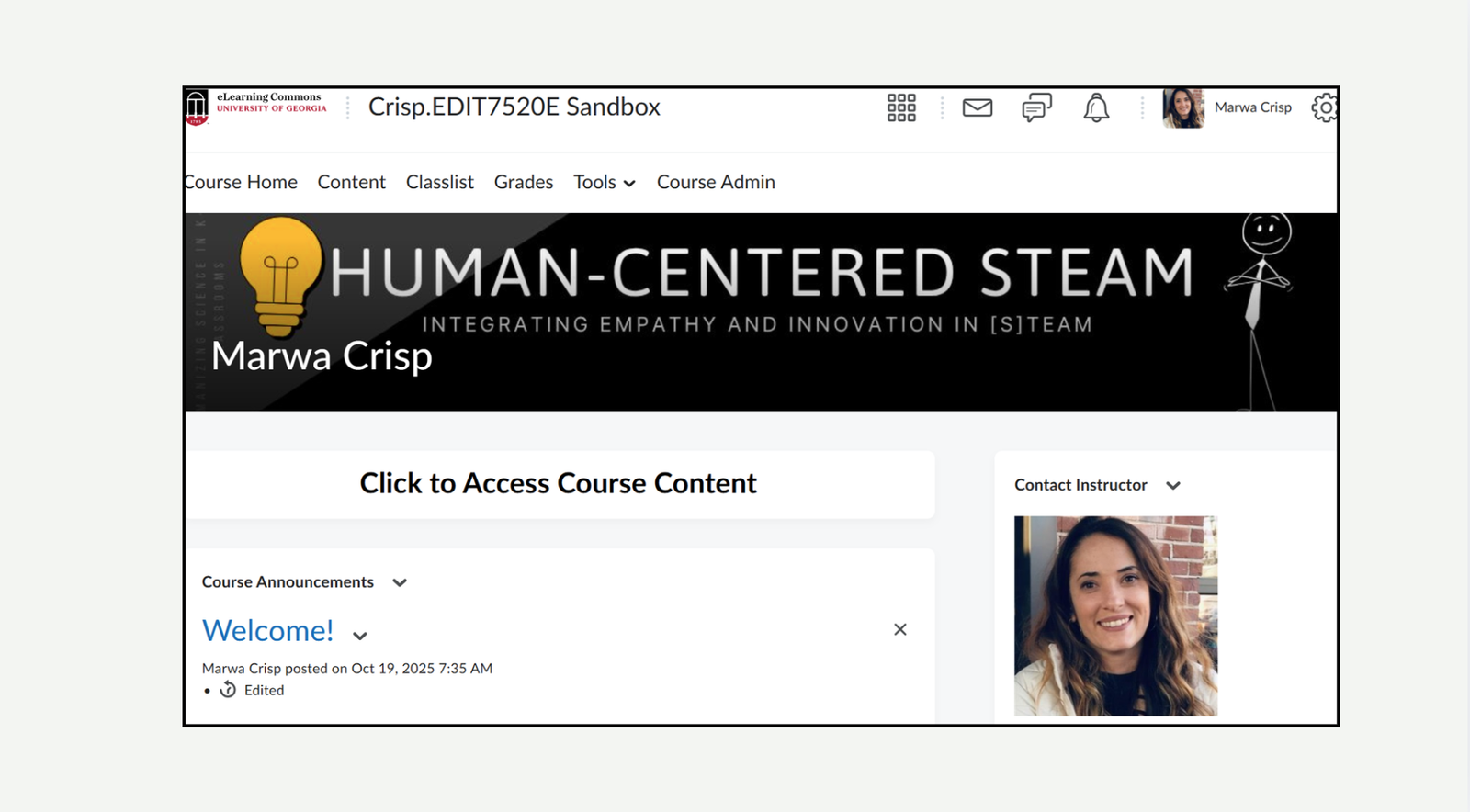
The project involved the design and development of a three-week asynchronous LMS course hosted in D2L Brightspace for K–12 science teachers. The course contained four modules, including one module dedicated to introductory materials, resources, and learner supports. This artifact was included in this theme as it was another product of applying the ADDIE process. To initiate the design and development process, a high-level design (HLD) document was created. The HLD document outlined objectives, timelines, module structures, and engagement strategies. Contextual and learner analyses were expanded to include linguistic and socioeconomic considerations, as well as learner expectations, to better support diverse learners and their needs.

Project goals and learner objectives were clearly articulated to guide the design. Careful alignment between learning goals and assessments was considered, and content was intentionally scaffolded to ensure that learning demands progressed appropriately. Performance and learning tasks were integrated throughout the course, along with opportunities for guided practice and application.

Learners engaged in both individual and collaborative group activities. Throughout the course, interactive discussions, reflective activities, prototyping exercises, and collaborative feedback opportunities were intentionally designed to create a more engaging and humanized asynchronous learning environment. The course incorporated a variety of instructional formats and tools to support engagement and accessibility, including videos, learner guides, discussion boards, polling activities, AI-supported simulations, and enrichment activities developed in Articulate Storyline 360.

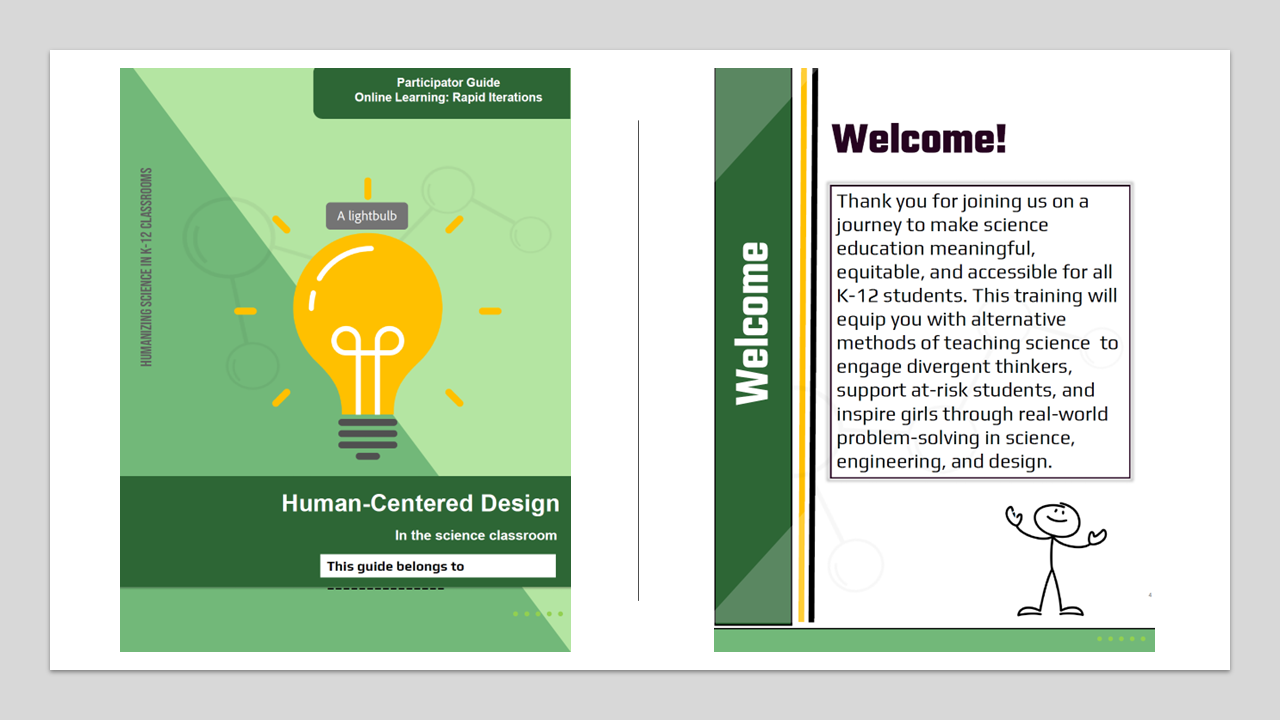
A participant guide and additional learning support were included to provide multiple pathways for learners to access and engage with course content. The design process was iterative, with desktop critiques and feedback used to refine the learning experience and evaluate usability, interaction, and learner engagement.

A major focus of the project was translating traditional face-to-face collaborative and creative activities into an online asynchronous environment. Learners participated in activities such as reflective writing, collaborative discussions, prototyping tasks, and Padlet-based design evaluations that encouraged feedback and interaction. Opportunities for continuous instructor and peer support created meaningful feedback loops, sensemaking opportunities, and spaces for creative thinking. Humanizing the online environment was a central design challenge and became a driving force behind many of the instructional and interaction decisions within the course.

Justification for Inclusion

The engagement and interactions within this artifact help validate the inclusion of this course in the portfolio. This artifact demonstrates the use of a variety of design activities, delivery formats, and learning environments. Although this is an asynchronous lesson, the activities included are intentionally designed to promote engagement, collaboration, and active learning experiences for participants through a range of interactive learning opportunities.

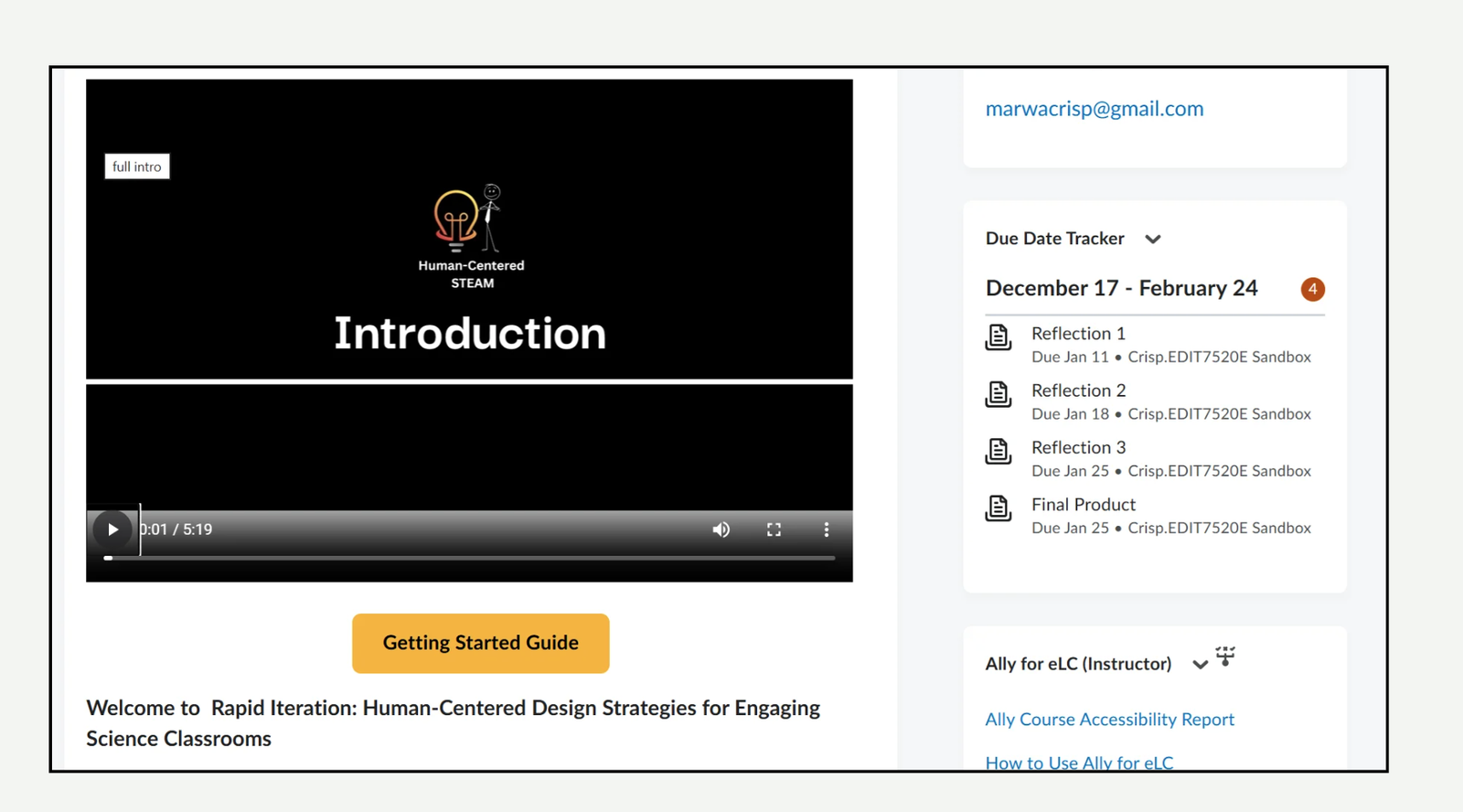
Some differing formats include videos, user guides, and polling and feedback activities. For example, the course begins with a video introduction and a Getting Started Guide to help learners navigate through the course. The video is intentionally placed to humanize the experience while providing relevance and meaning to the course. Both features support the diversity of learning activities and modalities.
Reflection and Self-Assessment

Through this project, I experienced significant growth in both my technical and instructional design skills. Designing within the LMS required careful attention to layout, accessibility, intuitive navigation, and learner interaction. I experimented with designing creative discussion prompts, structured engagement tools such as timers, collaborative technologies, and reflective learning strategies to create a more active asynchronous experience.

This project pushed me technically by requiring me to translate traditionally in-person activities into an online learning environment. For example, learners used Padlet for dot voting and design evaluation, which provided a visual and interactive space for commenting, collaboration, and meaningful feedback. I also experimented with creative discussion prompts, reflective writing activities, structured timers for engagement, and collaborative feedback opportunities to create a more active asynchronous learning experience.

One of the major challenges was formatting within the LMS and ensuring that layouts and design elements were intuitive and accessible for learners. This project also demonstrated growth in my ability to translate theory into practice, as I intentionally designed feedback mechanisms, considered how to create a more human and personalized learning environment, and worked to support collaboration in a setting that can often feel impersonal. Humanizing the online learning environment was challenging, but it stretched my thinking and pushed me to design more intentionally for engagement, interaction, and collaboration.

This project strengthened my ability to translate instructional theory into practical application while intentionally designing for engagement, collaboration, and learner-centered experiences. Overall, the course reflects my growing ability to design meaningful online learning environments that balance creativity, accessibility, interaction, and human-centered instructional practices.
× Enlarged View