Analysis
Analyze performance gaps through contextual, learner, and systems-level evidence to guide data-informed design decisions.
Contextual and Learner Analysis: Human-Centered Design in STEAM (In-person PD)
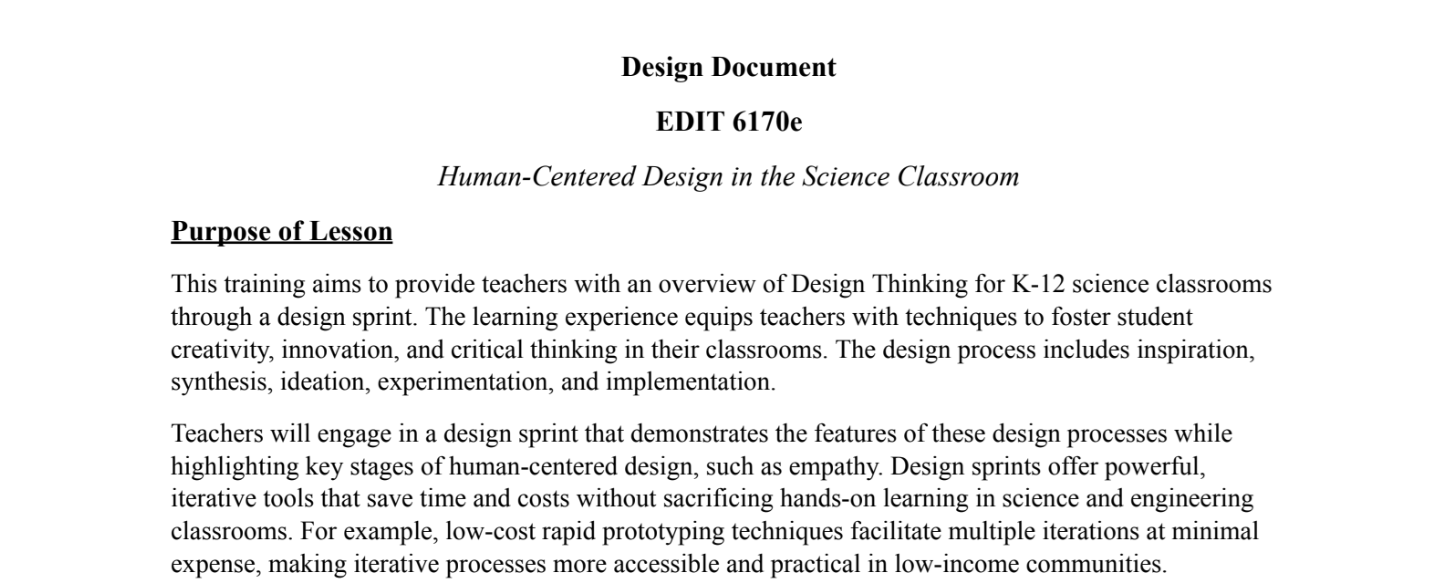
This artifact presents a contextual and learner analysis embedded within a high-level design document for an in-person professional development workshop and collaborative design sprint focused on human-centered design in STEAM education. The analysis examined learner needs, contextual barriers, stakeholder influences, and instructional environments of K–12 science teachers to inform the design of an empathy-driven professional learning experience.
Teachers often face barriers such as limited time, resources, and support when implementing inclusive and human-centered instructional practices in science classrooms.
This analysis informed the design of an in-person collaborative design sprint that provides practical, empathy-centered strategies to support inclusive and authentic science instruction.
- Contextual alignment with educator environments
- Identification of learner needs and barriers
- Integration of empathy-centered design principles
- Consideration of accessibility and instructional constraints
- Alignment of professional learning to authentic classroom application
Overview
The artifact is a design document for an in-person design sprint for K–12 science and engineering teachers. The document communicates the vision and intent of my design. It lies at the intersection of a foundational artifact and an analysis; however, it also supports future projects and frames the learner and contextual analysis, which is the focus of this reflection. The analysis is embedded in a high level document for in-person design sprint.
The learner and contextual analysis included in this document provides a thorough understanding of learner context and offers insight into learners’ characteristics, motivations, and aspirations, including how they are situated within their systems. It draws from multiple sources to provide a structured and deeper understanding of learners’ backgrounds, considerations, stakeholder involvement, and learning settings.
Key insights that emerged across related projects were linked to motivational factors that impact the success of outcomes, including stakeholder support and strategies that promote long-term implementation. These insights informed the development of objectives and the design of activities aligned with desired outcomes.
Justification for Inclusion
Due to the depth of learner and contextual insights embedded in the document, it is appropriately placed within the analysis theme. Understanding who the design is intended for supports the development of responsive learning environments and directly influences learner performance and outcomes. The analysis process helped define the measurable objectives and informed the design of learning experiences by centering learner needs within the design process. In doing so, systems and contextual factors were examined from multiple perspectives to develop a more comprehensive understanding. This was applied to align the task analysis to ensure the support the needs of the learner and design solutions.
This document demonstrates the ability to identify stakeholder needs and the causes of the target population’s performance gap, as well as to determine necessary support for instructional goals, an approach applied across both current and future projects in this portfolio. The analysis was informed by multiple readings of teacher professional development literature and observational data from my experience as a practitioner and learning specialist.
The most significant role this document played was in supporting a critical analysis of learner needs, contextual factors, and performance gaps. It provided a systems-level perspective of the factors contributing to performance gaps and served as an entry point for analyzing how these elements interact within broader instructional systems.
Value and Assessment
Constructing a contextual analysis not only shifted my perspective from developing isolated learning activities to broader systemic views, it helped develop transferable skills that would later come useful for more advanced applications such as developing a needs analysis.This document was an attempt to shape instructional experiences based on presented constraints, while expanding upon barriers previously understood through experience and literature. Through challenges, I developed sustainable instructional solutions and appropriate design decisions.
It helped to validate prior assumptions while challenging others. Assumptions include teachers immediately embracing the design, assuming my experiences are the same as others, and highlighting my biases that might affect the instructional framework of this document. It raised an internal question that I needed to address.
Overall, this document presents more than just a planning document; it represents my ability to think analytically and has deepened my skills in human-centered design. All of the factors mentioned above would later influence future designs. Through deepening my understanding of this process, I contributed more intentional and multifaceted designs.
Needs Analysis Report
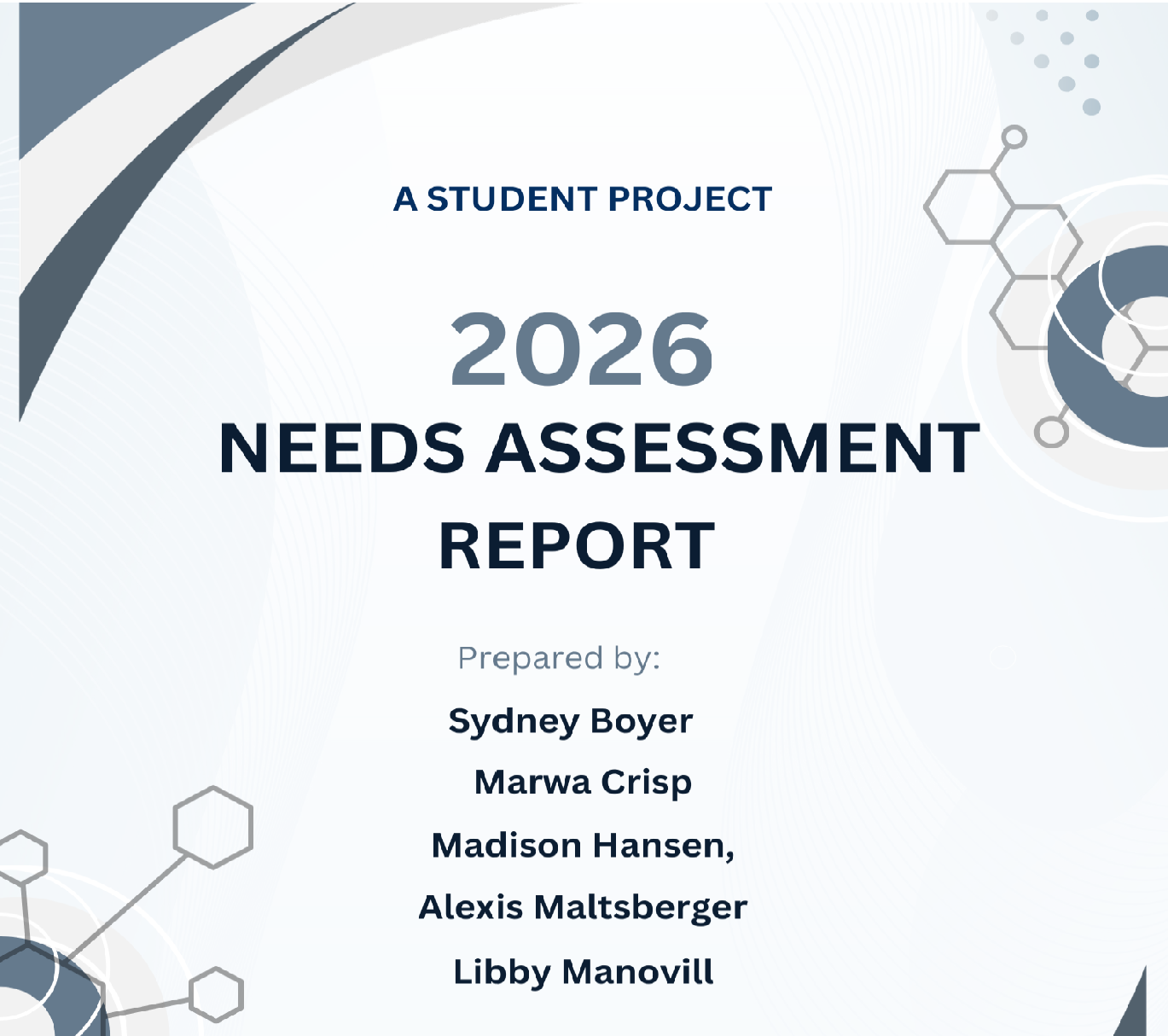
This artifact presents a collaborative needs analysis conducted to identify performance gaps, stakeholder needs, and systemic barriers within a professional science education organization. The analysis applied a Human Performance Technology (HPT) approach using interviews, surveys, and performance data to inform data-driven instructional and organizational recommendations.
Gaps were identified in conference attendance, membership engagement, professional learning participation, and equitable access to resources within GSTA.
Recommendations include redesigning professional learning experiences (workshops, peer learning, technology integration) and improving organizational systems (access, communication, membership engagement, and informal learning networks).
- Identifies performance gaps in teacher engagement and participation
- Analyzes stakeholder needs and learning environments
- Informs instructional and organizational design decisions
Process Overview
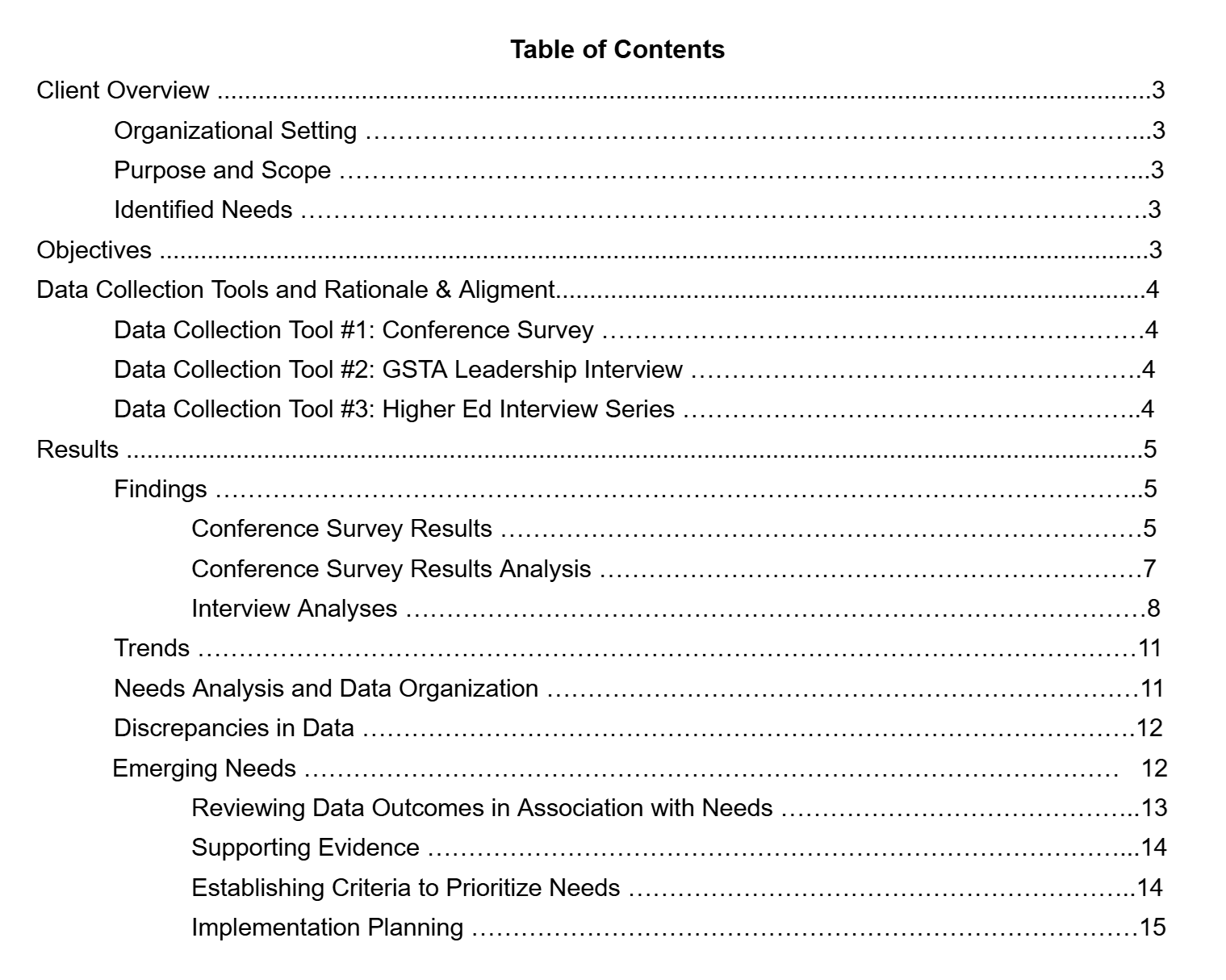
The Needs Analysis Report was a collaborative effort between five team members. We sought to identify performance gaps between the current state of performance and actual desires within a local state science organization. We applied data-driven decision-making to enhance performance, prioritize needs, and address them through short- and long-term interventions.
The process of conducting a needs analysis is performed. A Human Performance Technology (HPT) approach was used to gain an understanding of the system and its components. An initial interview was conducted with leadership members to identify the organization’s preliminary needs. As the needs analysis process progressed, additional assessments were conducted, and the final identification of needs was informed by data analysis and evidence-based decision-making.
The identified assessment tools are based by aligning the nature of the client needs and data sources. Data collection tools were constructed to determine root causes and validate assumptions to identify contributing factors, including system processes, environmental factors, accessibility to resources and tools, organizational policies, access to technology, and the human perspective. The data collection process involved stakeholder interviews and annual organizational conference survey results. Ethical considerations were acknowledged, and data collection methods were avoided if ethical issues were determinedFollowing the data collection process, the team identified needs with the data sources determined prior to data collection. Inferential and descriptive analyses were used to determine relationships between factors, identify thematic patterns, and uncover discrepancies between needs and data sources.
Once needs were prioritized and data-informed decisions were finalized, instructional and non-instructional recommendations were identified and communicated to the client through written reports. Instructional interventions included practical organizational processes, systems tracking solutions, e-learning solutions, and mentorship programs. The recommendations were followed by statements outlining the limitations of the report, as well as suggestions for future investigations.
Justificaiton for Inclusion
This report is included as an artifact to demonstrate the ability to conduct a needs assessment, recommend solutions that address learning and/or performance needs, select appropriate data collection tools to support a project, and establish a process for determining instructional solutions. It reflects progression from foundational instructional practice toward more advanced systems-based approaches.
The thematic analysis within the report serves as the primary mechanism for identifying and interpreting organizational needs. By analyzing patterns within the data, the analysis sheds light on key performance and instructional gaps within the organization.
The inclusion of this report also demonstrates the ability to apply a systemic perspective to the design and development of solutions, despite the complexity of organizational systems and their interconnected components. This approach helped validate prior assumptions and extend considerations to a broader, system-level context.
Furthermore, this artifact highlights key competencies associated with Human Performance Technology (HPT) and needs analysis, including the ability to interpret systems and system processes through a holistic lens. It demonstrates the design of sustainable instructional and non-instructional interventions that are grounded in data-driven findings and aligned with identified needs.
The proposed solutions are directly informed by the analysis and tailored to the needs identified through the thematic and data analysis processes. The recommendations are limited to the data obtained; however, the report demonstrates the connection between them.
Value and Self Assessment
This was my first formal needs analysis report using the HPT approach. Conducting the needs analysis provided me with an opportunity to learn a systematic approach to understanding and analyzing complex systems and to use that understanding to design and develop interventions through informed decision-making.
This experience improved my ability to distinguish between surface-level needs and deeper root causes that may impact systems, as well as to align interventions with the needs of the system. It also strengthened my understanding of systems thinking and how to address findings within complex organizational systems.