Responsibilities: Storyboarding, objective alignment, AI-driven scenario, persona design, user testing and iterative design improvements, HTML integration for interactive learning elements, image editing, AI character interactions using HTML embeds and API integration in Articulate Storyline
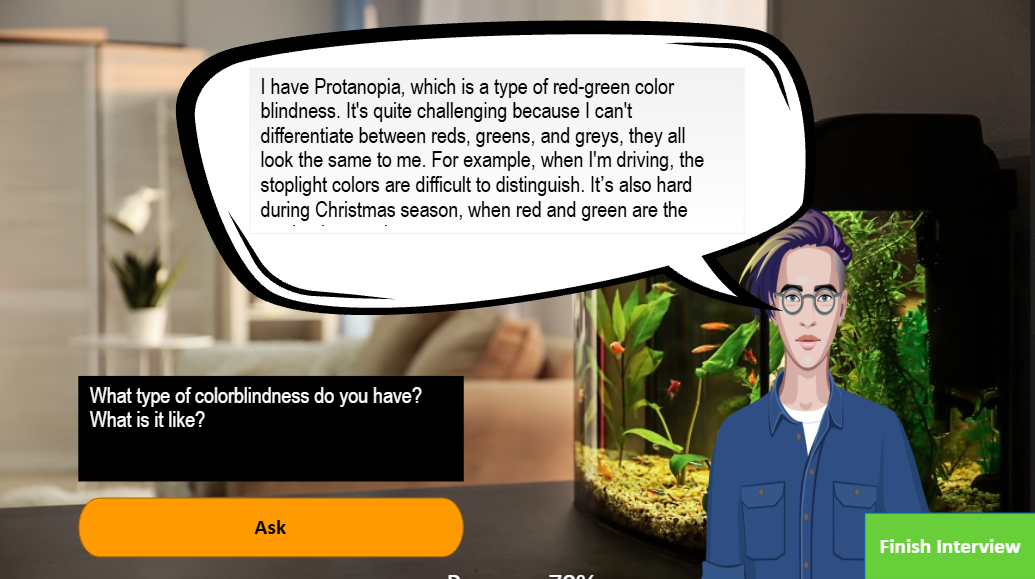
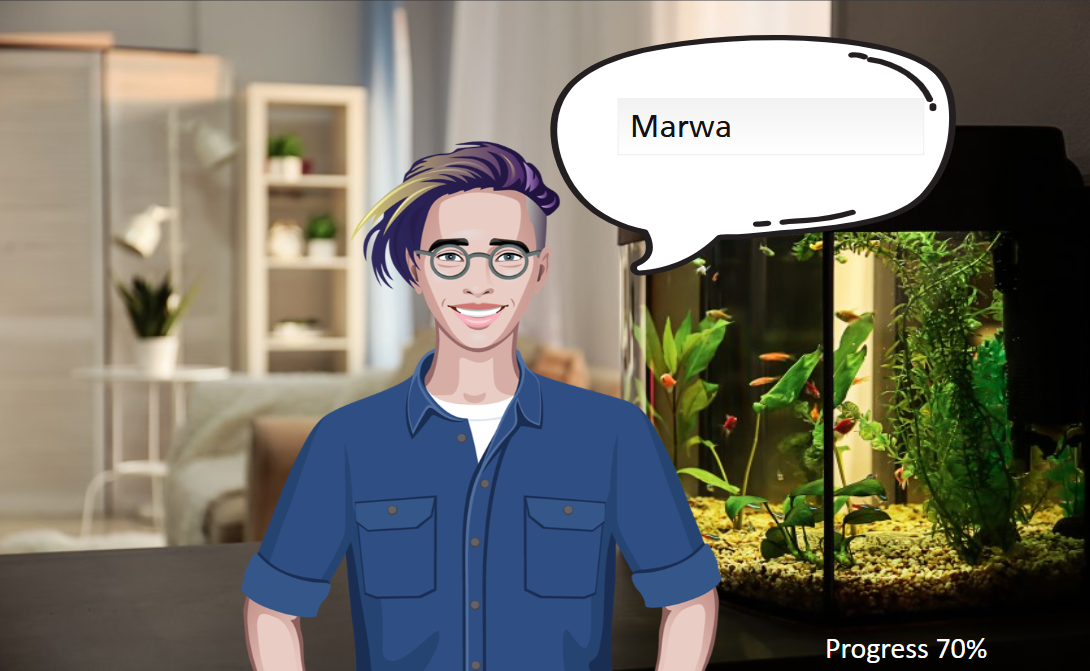
This is a human-centered Storyline module designed to help K–12 STEAM teachers build empathy and apply inquiry-based instructional strategies through scenario-based learning. Learners engage in activities that require them to take on the perspective of individuals with color blindness and build empathetic insights through observation, immersion, and interactive experiences. Learners interact with AI proxy characters, undergo scenario-based activities, and participate in visual simulations based on real-life responses and experiences shared by individuals with color blindness on social media platforms. Learners ultimately reflect on their experiences to gain meaningful insights.
There is a need for engaging, human-centered learning experiences that help K–12 STEAM teachers develop empathy and apply inclusive, inquiry-based strategies to better support learners with color blindness.
The Solution
A 30-minute AI-enhanced Storyline module that immerses teachers in scenario-based, human-centered design experiences to build empathy and support inclusive, inquiry-based instruction.
Key Highlights
Demonstrates coherent instructional alignment by connecting learning objectives, instructional experiences, and formative assessment within an interactive e-learning module.
Applies constructivist and experiential learning theories through scaffolded reflection, immersive scenarios, and iterative learner engagement.
Integrates human-centered design practices including empathy mapping, accessibility simulation, and persona-driven instructional decisions.
Uses emerging instructional technologies and multimedia interactivity to support accessibility, engagement, and differentiated learner experiences.
Design Decisions and Reflection
Overview
This artifact represents a significant turning point in my instructional design practice and reflects both my technical growth and evolving design process. It is my first fully developed Articulate Storyline e-learning solution for K–12 STEAM teachers. The project is intentionally designed using Human-Centered Design principles and is grounded in the Successive Approximation Model (SAM) and ADDIE to guide and structure development. This artifact demonstrates foundational technical skills and their application in practice, as well as my transition from classroom educator to instructional designer of adult learners.
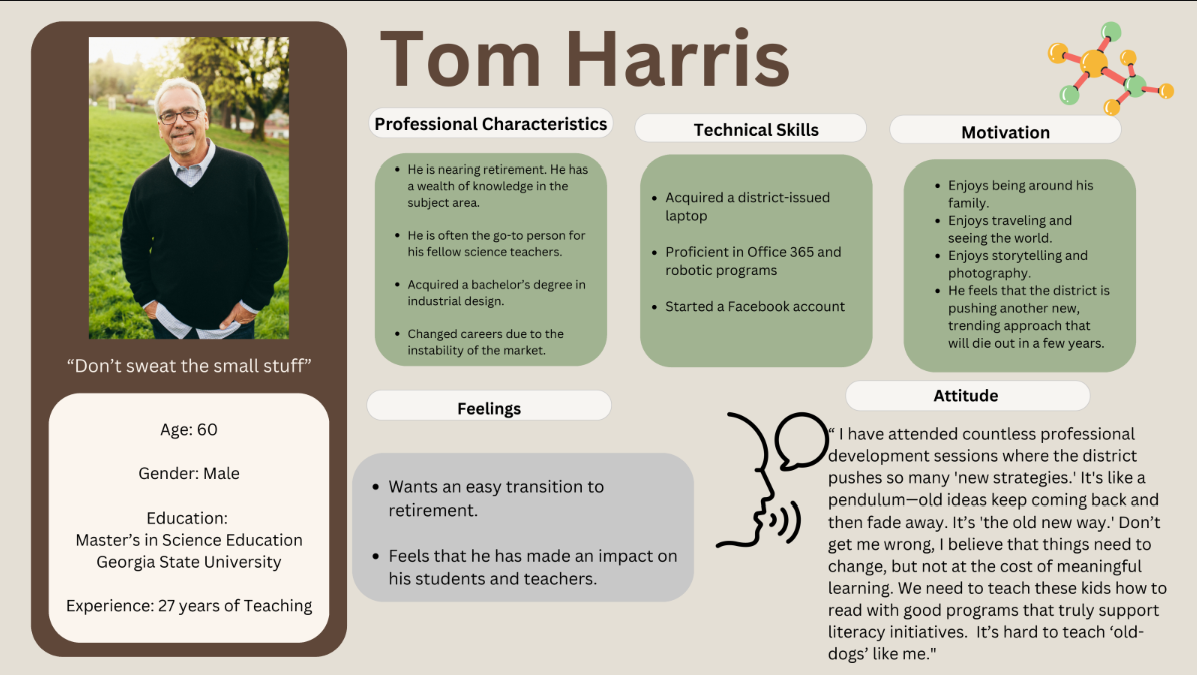
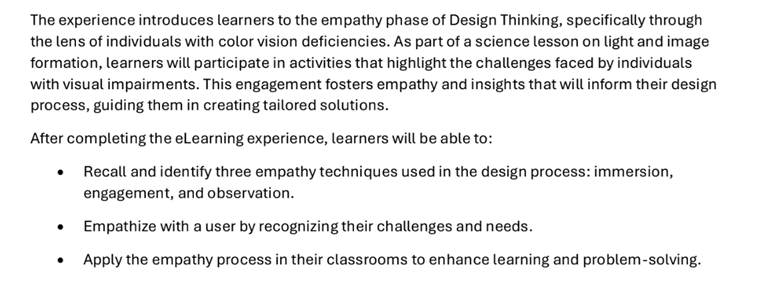
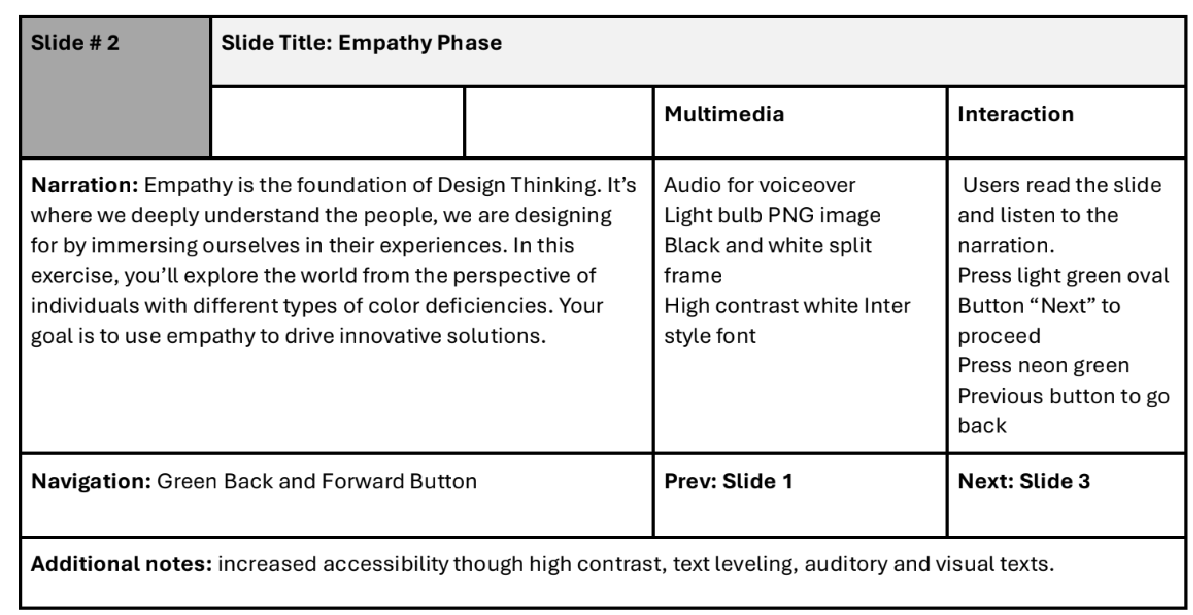
Evidence of this process is contained in a needs analysis summary, a written storyboard (including learner goals and objectives), user persona development, and desktop critiques, all of which demonstrate the iterative prototyping process that guided development and instructional decisions throughout the project.
Figure 1 | User Persona
Figure 2 | Objective Snapshot
Figure 3 | Storyboard Snapshot
Justification: A Balancing Act
This artifact aligns with foundational instructional design principles through the intentional application of instructional theories, learner-centered practices, and alignment strategies within an asynchronous learning environment. It required a constant shift between theoretical frameworks, emerging design approaches, technological constraints, and learner perspectives, with ongoing tradeoffs that ultimately informed a scenario-based e-learning solution aligned with project goals and objectives.
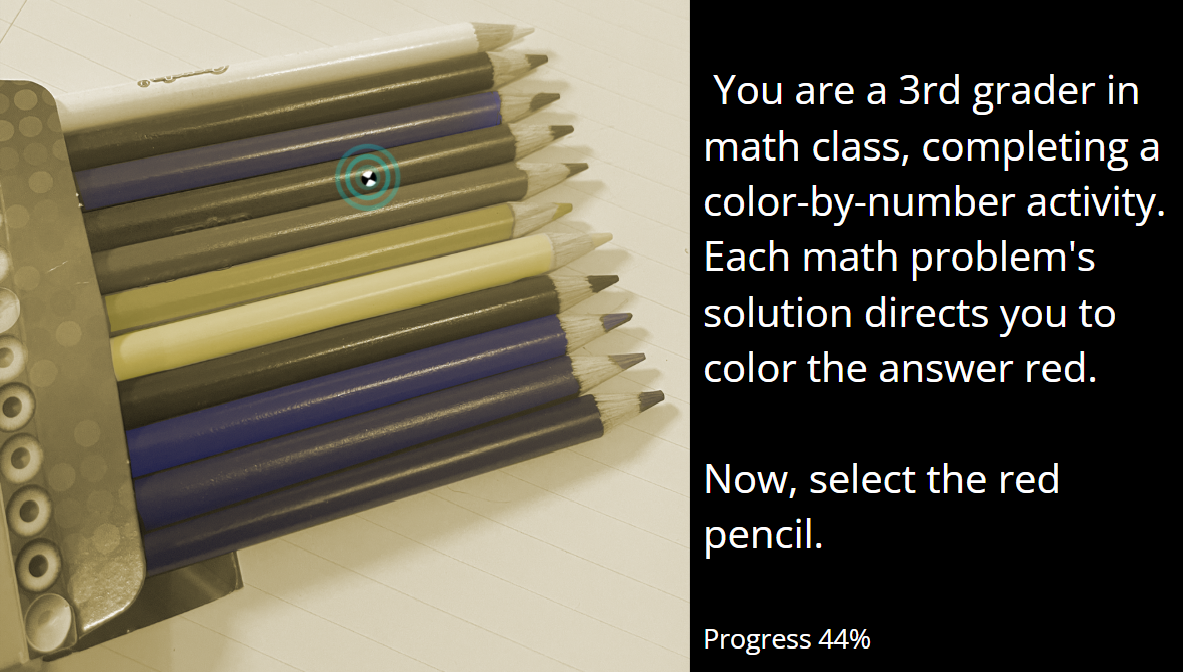
The solutions were designed through a constructivist lens emphasizing experiential learning, reflection, empathy, and active learner engagement. Learners progressed from observation and immersion activities toward building empathetic insights and informed judgments about individuals with color vision deficiencies. As they navigated the experience, they continuously built upon prior knowledge through scenario engagement and reflective journaling.
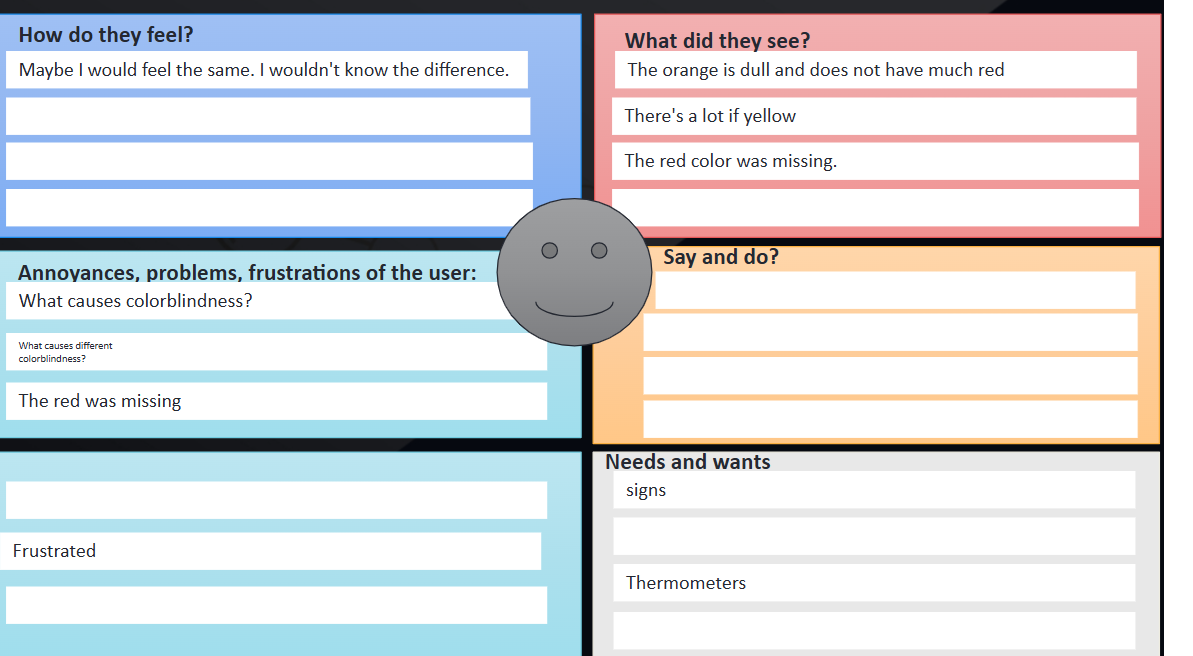
This process was intentionally structured so that interactions, observations, and reflections contributed to a cumulative empathy map designed to deepen understanding of user experience. Through immersive scenarios, guided prompts, and reflective journaling, learners analyzed user perspectives and developed empathetic insights grounded in human-centered design principles. These activities supported perspective-taking, metacognition, and deeper reflection on accessibility and inclusive instructional design.
Figure 4 | Scenario-Based Simulation
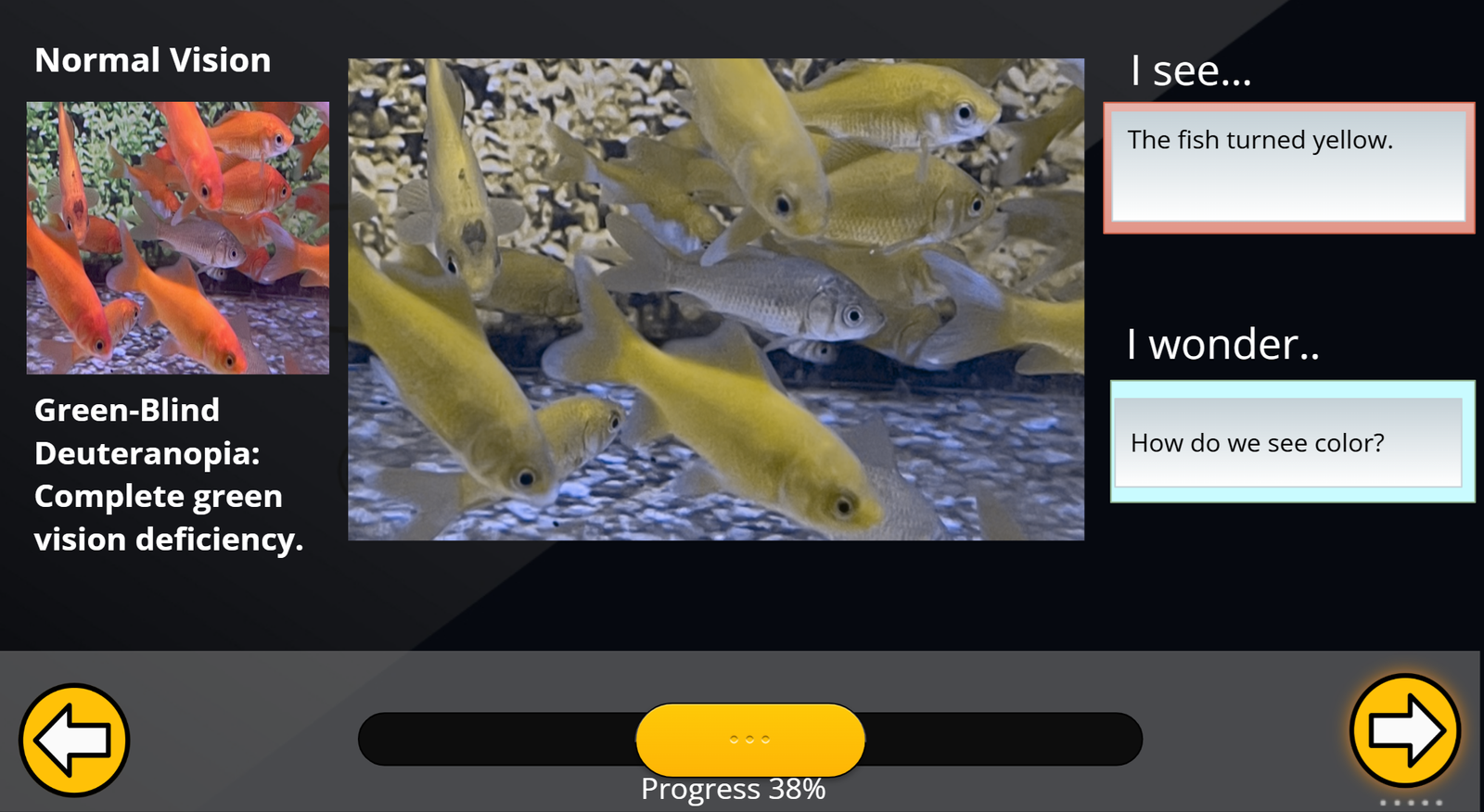
Figure 5 | Visual Simulation
Figure 6 | Empathy Map
Accessibility and experiential learning were further strengthened through GIMP-modified visuals simulating multiple colorblind perspectives, along with interactive navigation tools that allowed learners to compare visual conditions in real time. These design decisions reinforced learner-centered design, accessibility, and empathy as core principles of foundational instructional design practice.
The module also incorporated foundational instructional strategies such as scaffolding, chunking, sequenced learning objectives, embedded feedback opportunities, and ongoing formative assessment. Learning objectives were intentionally sequenced to move learners from foundational understanding toward higher-order thinking aligned with Bloom’s Taxonomy.
Value and Self Assessment: A Shift in Perspective
This was my first attempt at a full online Storyline solution and one of my earliest efforts to translate a long-developed idea for engaging young learners in STEAM through storytelling into a fully realized digital learning experience. I had to balance how to bring this vision to fruition, what features to include, and how to leverage those features to make the idea function effectively in practice.
While this project may appear “beginner” from an instructional design standpoint, particularly aesthetically, it demonstrates strong foundational growth: the ability to convert imagination into implementation, perseverance through technical learning, and a willingness to acquire new skills to bring a vision into fruition. I had no prior background in Storyline or coding at the start of this project. By the end, I challenged myself to integrate multiple forms of media and interaction, including custom visuals, PowerPoint animations, scenario-based storytelling, interactive navigation, and accessibility-focused design elements.
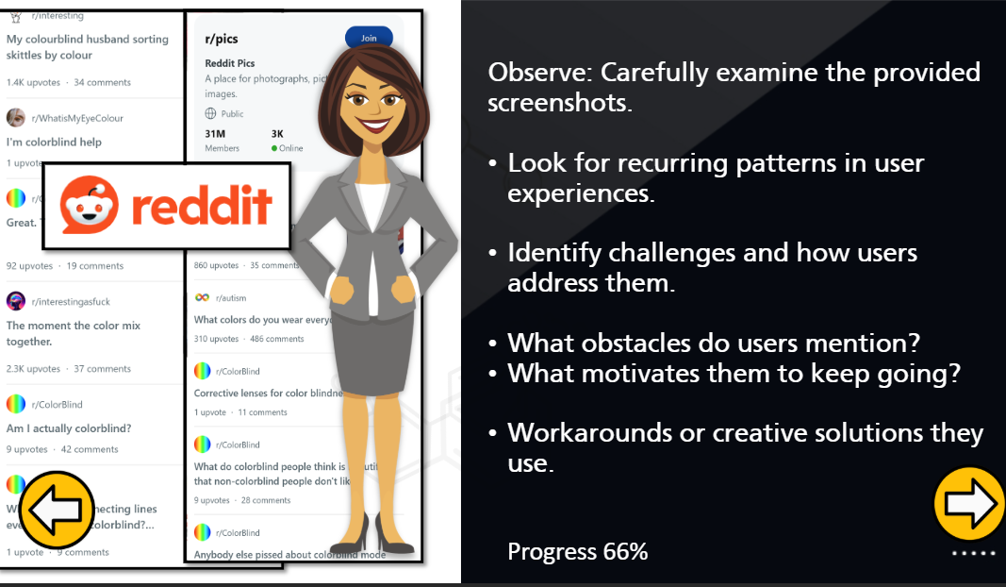
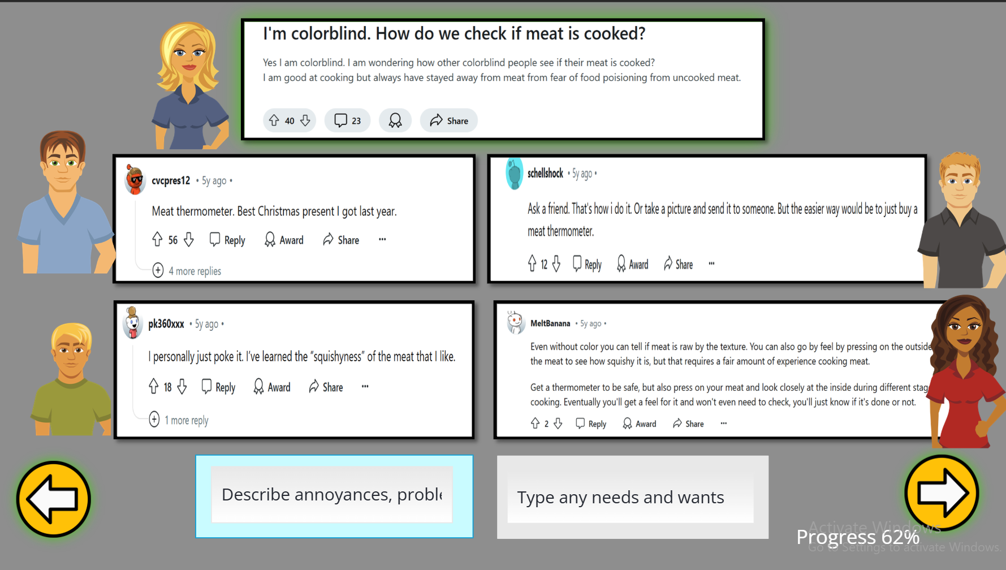
To create an authentic and real-world experience, I incorporated simulated social media posts using actual Reddit posts that provided real-world perspectives from real people for learners to gain perspectives on the experiences of color blindness. Reddit posts were AI narrated to provide realistic conversations and personal reflections of everyday challenges, such as interpreting color-coded information, navigating interfaces, and completing tasks that rely heavily on color recognition. This approach helped humanize the learning experience while encouraging empathy, reflection, and deeper learner engagement.
Figure 7 | Social Media Opening
Figure 8 | User Discussion
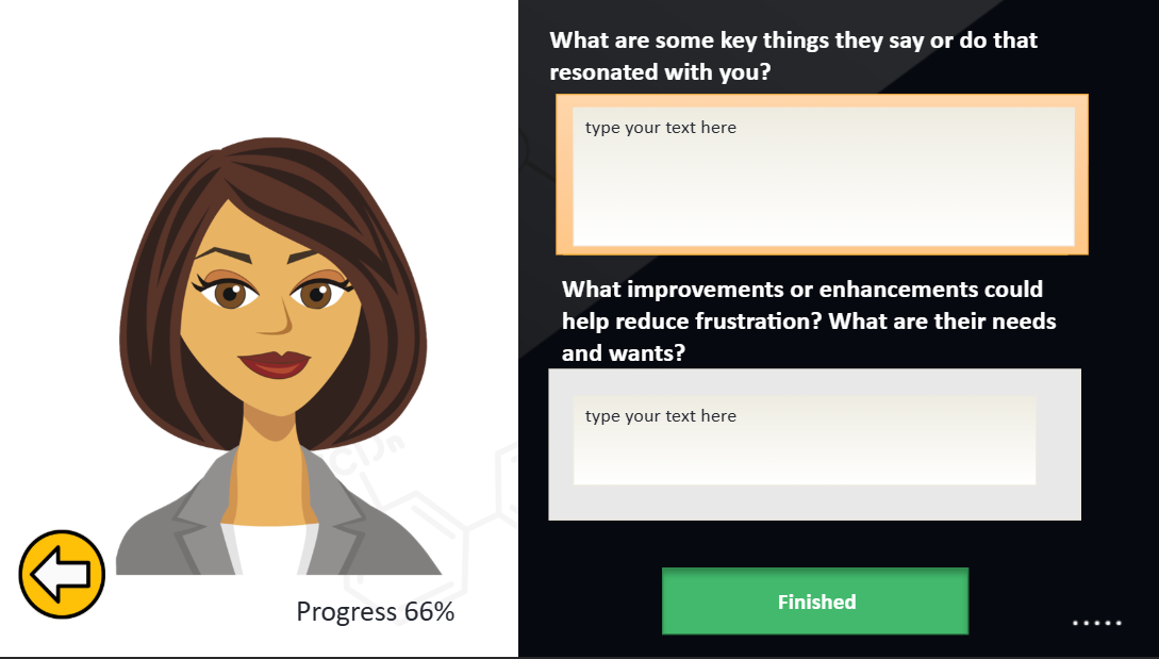
Figure 9 | Recording Empathetic Insights
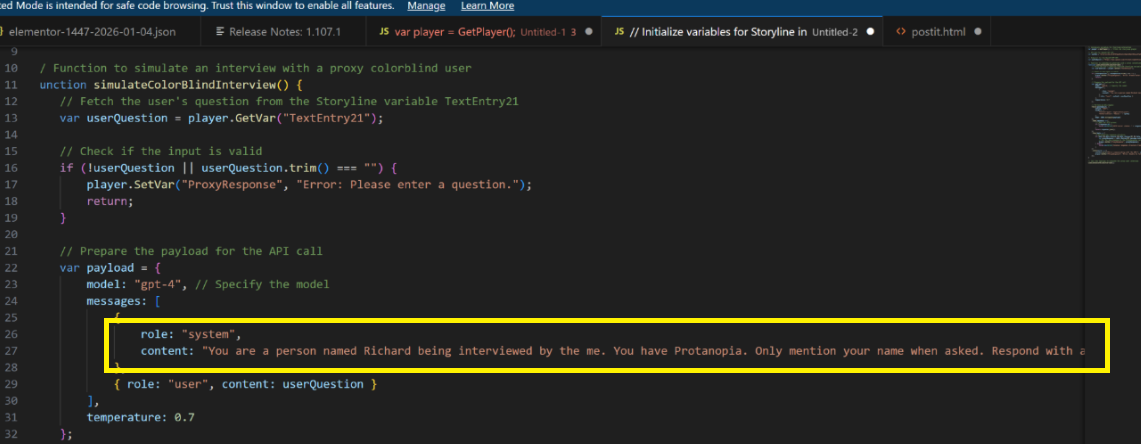
The intention behind incorporating these features went beyond simply showcasing my technical abilities; rather, it demonstrated the connection between what can be imagined and what can be practically implemented within an instructional experience. One example of this was revising code to personalize the learning experience by building AI-driven characters and using variables and triggers to create more adaptive, learner-centered interactions.
Figure 10 | Designing AI with HTML
Figure 11 | Personalizing Experience with Triggers & Variables
Figure 12 | Engaging with Proxy User
The instructional design process was guided by SAM and ADDIE, ensuring alignment between learning objectives, instructional activities, and embedded assessment opportunities. This created coherence between goals, instruction, and evaluation throughout the learning experience. With these foundational tools, they have allowed me to leverage adult frameworks to design solutions htat meet ault learing needs. The development of this artifact strengthened both my instructional design foundation and my technical capacity to build interactive learning experiences. It represents an important transition point in my practice, where I moved from conceptual design thinking into full implementation using professional authoring tools and iterative design processes.
This is not a project about perfection; rather, it is a project about building foundational instructional design and technical skills, pushing myself beyond my comfort zone, and learning how to work within constraints while transforming ideas into meaningful and functional learning experiences. The project reflects persistence, experimentation, and the ability to balance creativity, learner needs, accessibility, and technological limitations in order to make imagined possibilities become practical realities.
×
```
Theory in Practice Reflection: Blended Learning Design using Rise 360
Course: EDIT 6400E – Emerging Approaches in Teaching, Learning, and Technology
Tools: Rise 360, Human-Centered Design, Storyboarding, Learning Theory Integration
Responsibilities: Written reflective analysis of learning theory application, instructional design in blended learning environments, integration of constructivism, cognitivism, and behaviorism, design justification, learner analysis, and evaluation of human-centered instructional strategies using Rise 360
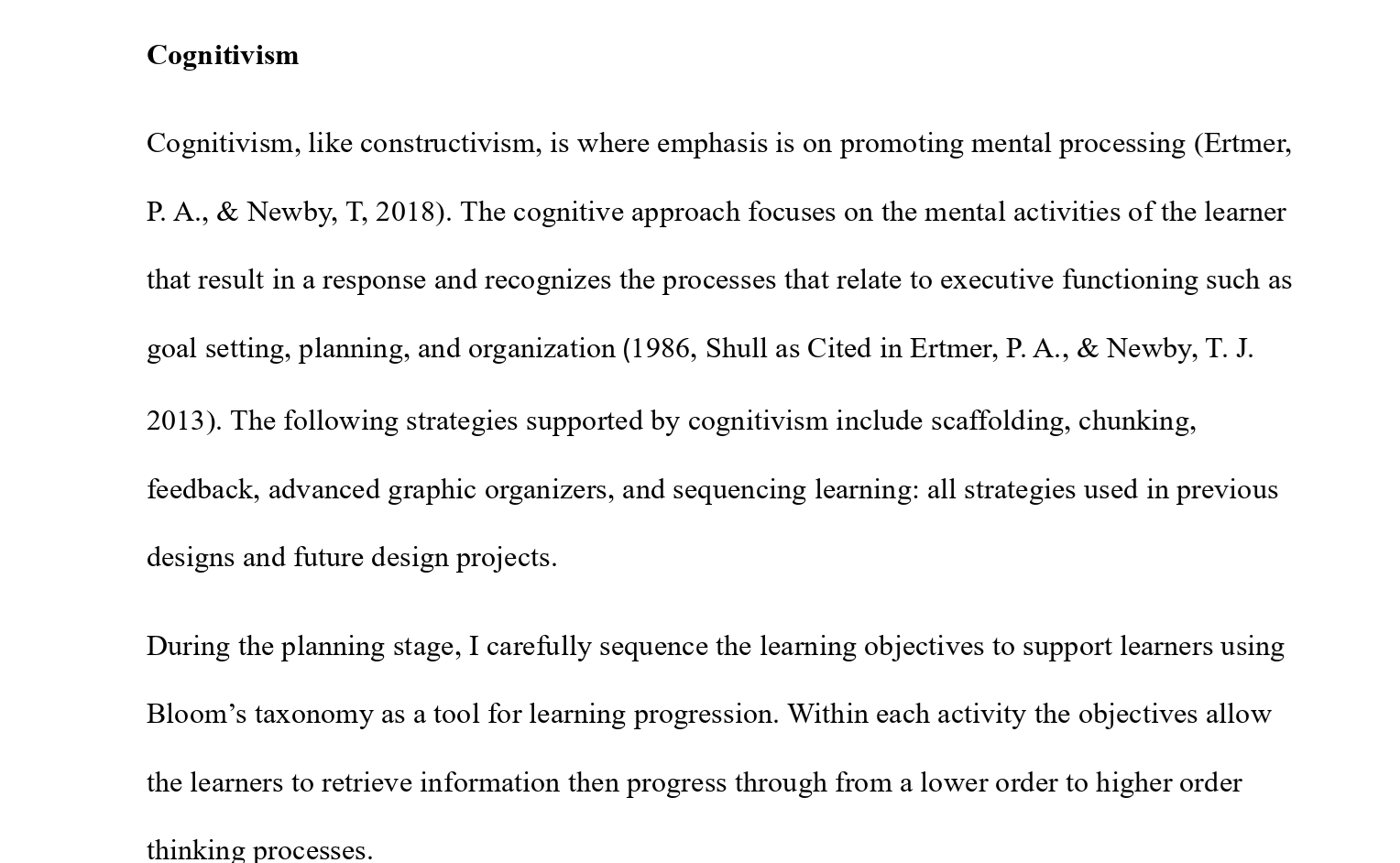
Reflective writing artifact demonstrating human-centered design, iterative eLearning development, learner analysis, instructional alignment, storyboarding, and integration of emerging digital learning technologies through Articulate Rise 360. This artifact reflects my application of learning theories including constructivism, cognitivism, and behaviorism to the design of a human-centered blended learning experience using Rise 360. It demonstrates how instructional decisions were guided by theory, learner needs, and iterative design practices within a STEAM education context. Through this process, I integrated blended learning strategies, digital tools, and structured alignment to create meaningful and engaging learning experiences. The reflection highlights my ability to connect theory to practice while designing accessible, learner-centered instruction in evolving educational environments.
The challenge of creating a cohesive, high-engagement instructional design framework that effectively bridges core learning theories with actual digital tools, avoiding fragmented or purely passive online experiences.
The Solution
A responsive, human-centered blended learning environment built in Rise 360 that maps out clear theoretical applications (constructivism, cognitivism, behaviorism) to guide intentional design sprints and collaborative student activities.
Key Highlights
Demonstrates coherent instructional alignment by connecting learning objectives, instructional experiences, and formative assessment within an interactive e-learning module.
Applies constructivist and experiential learning theories through scaffolded reflection, immersive scenarios, and iterative learner engagement.
Integrates human-centered design practices including empathy mapping, accessibility simulation, and persona-driven instructional decisions.
Uses emerging instructional technologies and multimedia interactivity to support accessibility, engagement, and differentiated learner experiences.
Design Decisions and Reflection
Overview
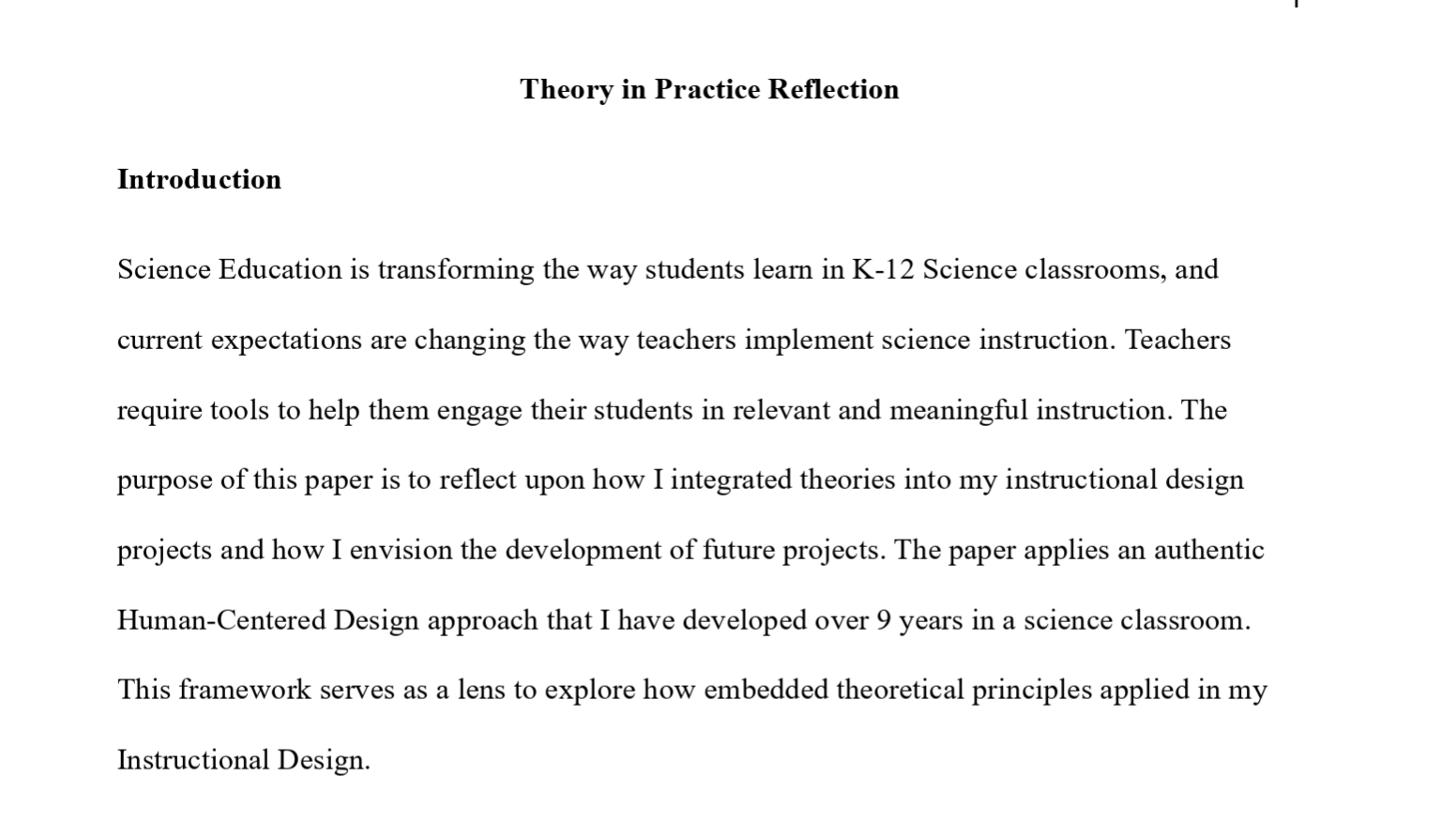
This is a reflective artifact that aims to consider the assumptions of technology-enhanced approaches, grounding my work in constructivism, cognitivism, and behaviorism. I bridge these theories to practical applications, design decisions, and a blended learning environment. I demonstrate the utility of these theories in emerging technologies to engage learners, framing this through reflection on AI simulations, Rise 360 development, and intentional online interactivity.
This paper begins by framing the problem and proposed solution, providing context for the design, and explaining the human-centered design approach within a STEAM framework. Learners engage in a blended learning design sprint that introduces the constructivist perspective that informs the design. This unique learning experience integrates technology-based tools, such as Rise 360, with in-person activities, allowing learners to collaborate in meaningful ways.
Justification for Inclusion
The intended outcome of including this artifact is to construct a more complete picture of my abilities. The artifact goes beyond my application of theory and practice; I critically reflect on my design decisions, demonstrating my core knowledge of theoretical principles at a deeper level of utility and application. It provides a lens for my design decisions, highlighting the intent behind my design. I demonstrate how theory and emerging technology guide instructional design and inform decisions, even through the “messiness” of learning environments.
One of the essential skills of a designer is the ability to communicate and articulate ideas clearly. The placement of this artifact helps communicate my understanding of theory and its application in a deeper, more diverse, and more explicit way. Including this artifact within this theme is intended to provide further evidence of my ability to demonstrate the effectiveness and versatility of my written communication.
Good educators and designers engage in constant reflective practice, which is essential for evaluative thinking and continuous improvement.
“Reflective writing provides a window into intentions that may not have been fully executed and helps validate theoretical lenses that supported design decisions, even when they are not explicitly stated.”
I recognize the importance of reflective practice as part of evaluative thinking. These practices help strengthen adaptability, inform design decisions, and support deeper alignment. Reflective writing provides a window into intentions that may not have been fully executed and helps validate theoretical lenses that supported design decisions, even when they are not explicitly stated.
Value and Self-Assessment: Reflective Practice as a Catalyst for Professional Growth
The process further highlights the trade-offs and limitations of learning theories. I recognize the important balance between applying a pragmatic lens and a theoretical one to achieve the desired outcomes. Understanding these limitations further informs design decisions and helps support the alignment of desired outcomes, including learning and performance impact. This artifact is further evidence of my ability to adapt to contextual constraints and produce instructional solutions that meet learner’s needs.
The value of this item relies on my ability to extend my thinking, demonstrating the interplay between theory and application. I not only stretch my ability to connect theory with practice, but the process of constructing this artifact elicits further questions about the theory and my own position on my own ideas of learning and performance. It highlights my reflective practices and superimposes theories throughout the framework that I have developed and practiced over time.
This reflective opportunity was also a form of self-evaluation of my own learning of adult learning theories. It was an opportunity to critically evaluate my own design decisions and assumptions against goals and realistic learner experiences. This artifact exemplifies the importance of reflection in supporting growth.