Design and Development

Storyline Project: Human-Centered Design in STEAM Classrooms

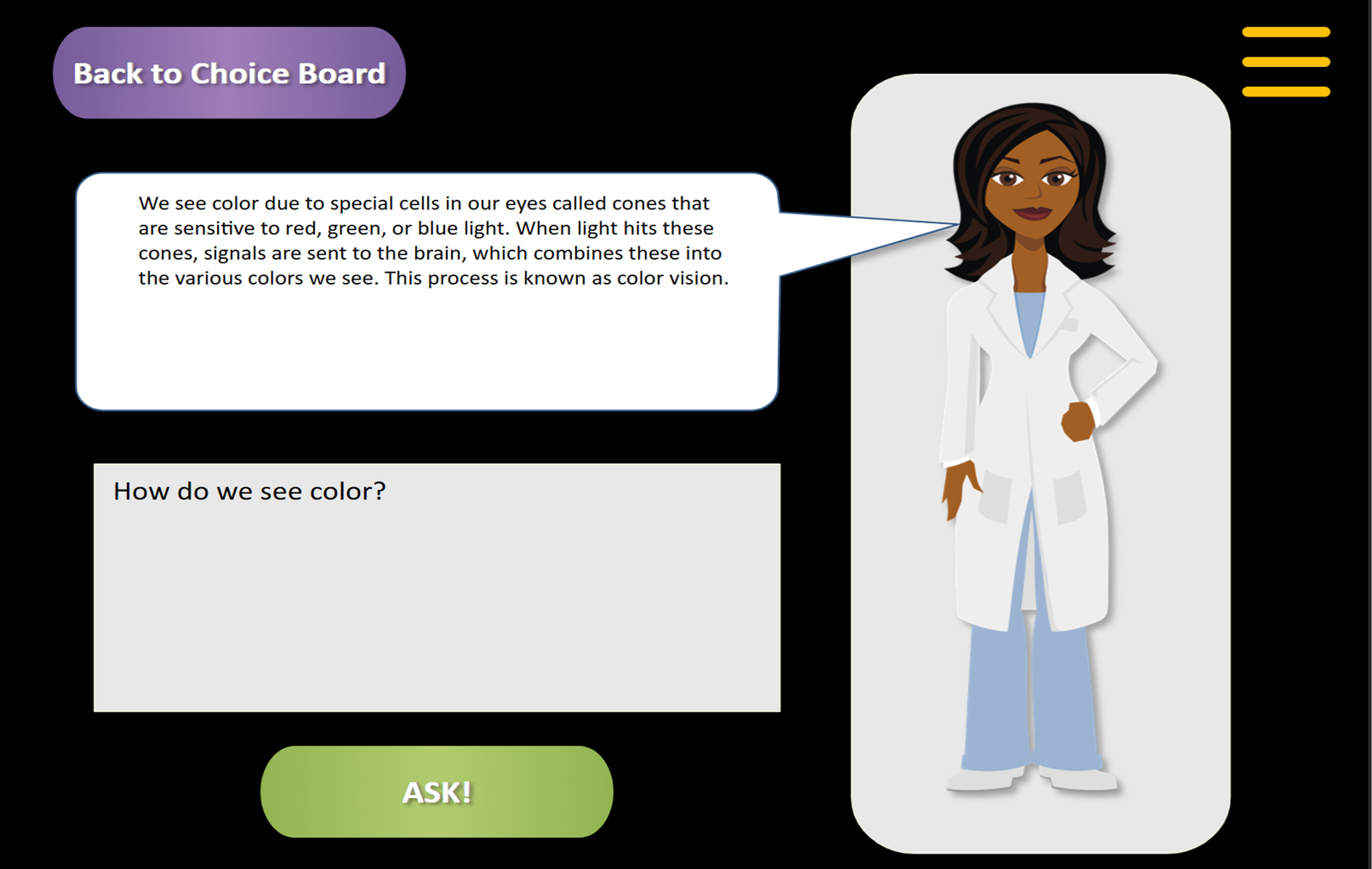
This Storyline module immerses learners in the human-centered design process while integrating K–12 science concepts. Learners interact with AI-driven characters, explore diverse user perspectives, and engage in scenario-based problem solving that reflects real-world challenges in STEAM education.

Tools Used: Articulate Storyline, AI Interaction, Multimedia Integration

Key Concepts: Human-Centered Design, Storytelling, AI Simulation, Scenario-Based Assessment
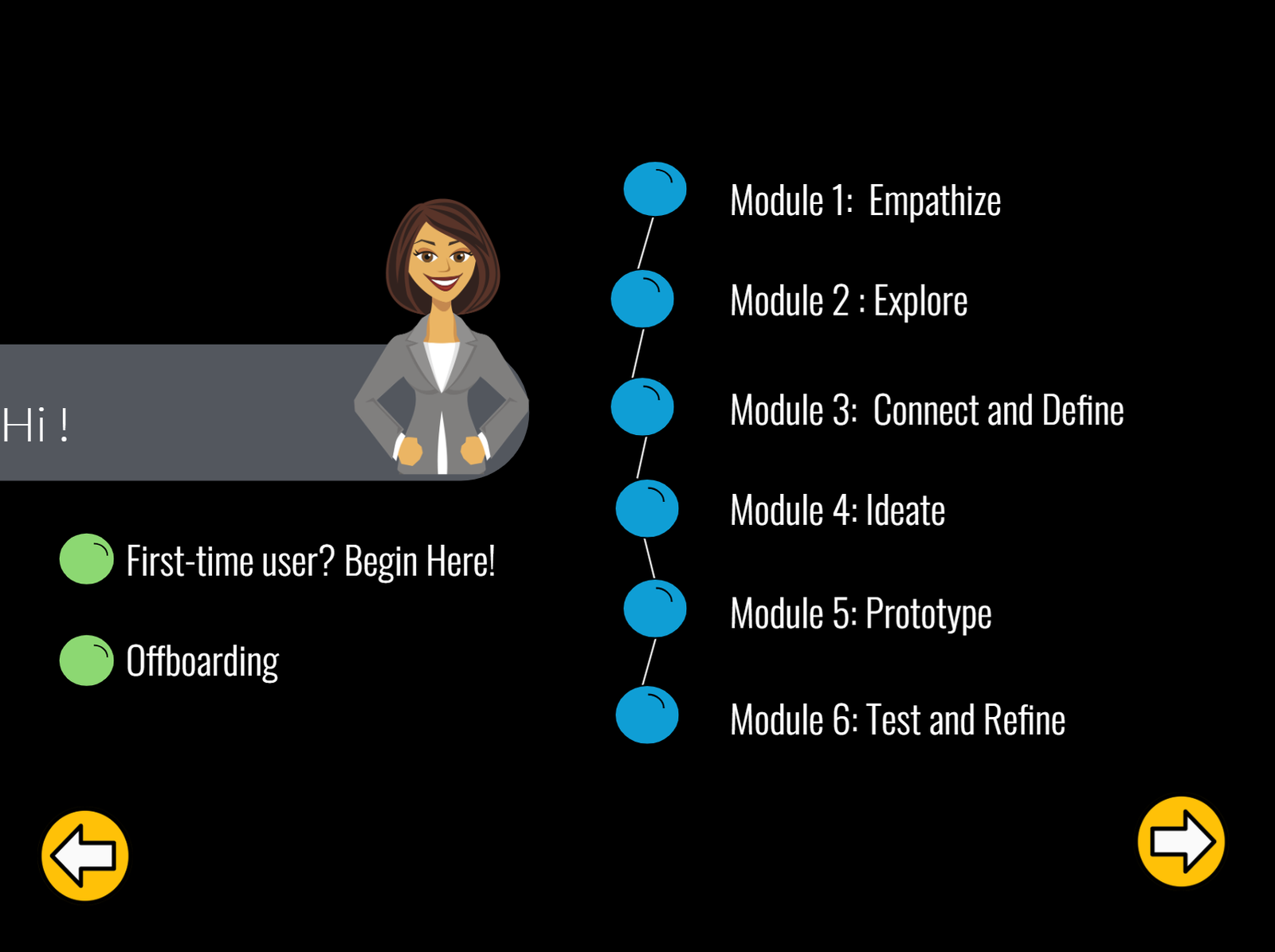
Storyline Scenario Screenshot
AI Interaction Screenshot
Problem

Traditional science instruction often lacks opportunities for learners to engage with diverse user perspectives or real-world STEAM challenges.

Solution

Developed an interactive Storyline module integrating human-centered design, AI simulations, and scenario-based learning to foster empathy and problem-solving skills.

Summary & Key Highlights
  • Integrates human-centered design with STEAM instruction
  • Uses AI-driven character interviews and scenario simulations
  • Supports inquiry, empathy, and real-world problem solving
  • Models immersive, scenario-based learning experiences

Rise 360 – Blended Learning Module

This blended learning module demonstrates my ability to design online and in-person learning experiences that integrate human-centered design principles in science instruction. Learners complete Rise 360 activities and then apply knowledge in collaborative, scenario-based exercises, reflecting authentic classroom challenges.

Tools Used: Rise 360, Articulate Storyline, Multimedia Integration, Scenario-Based Design

Key Concepts: Blended Learning, Human-Centered Design, Interactive Learning, Online + In-Person Integration
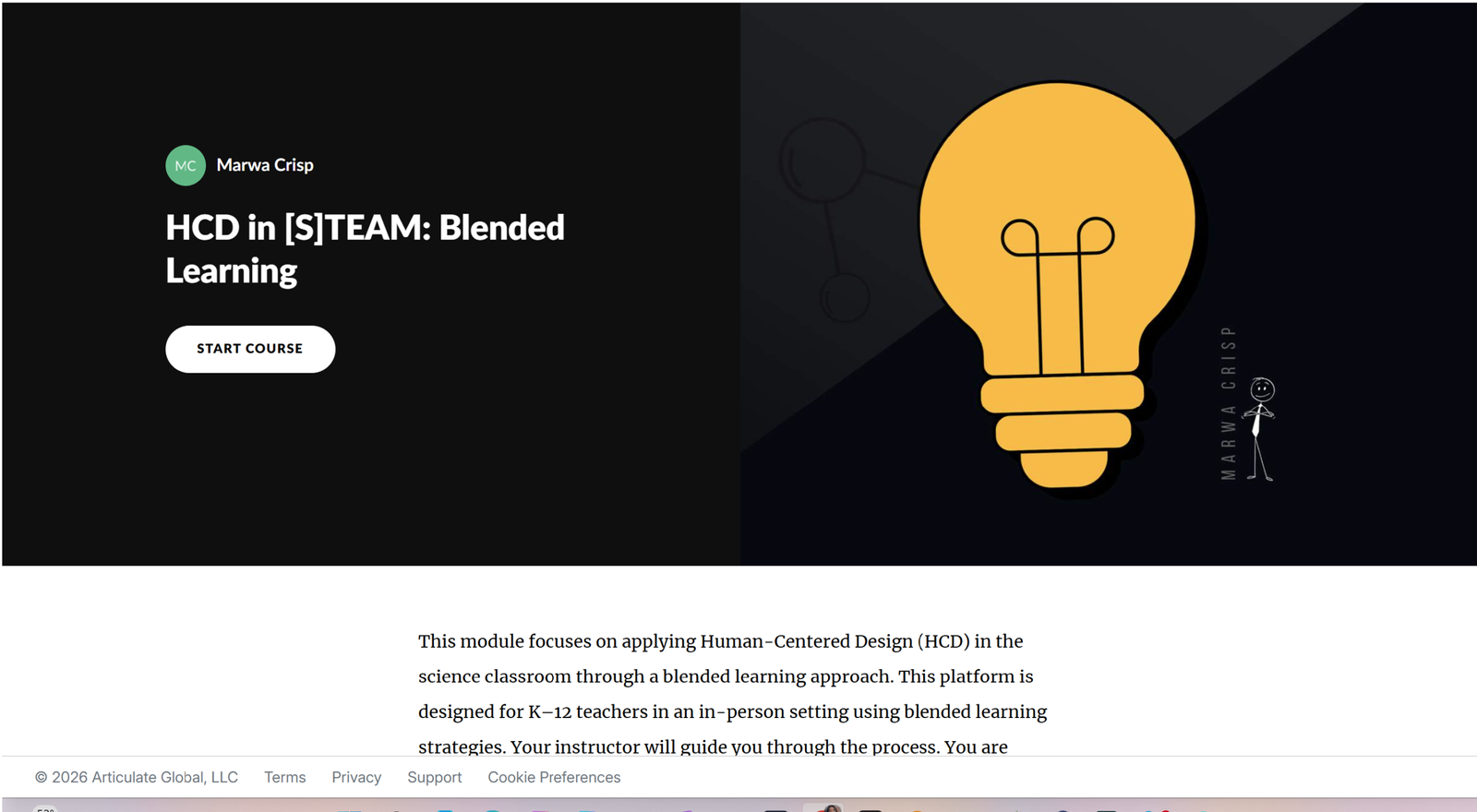
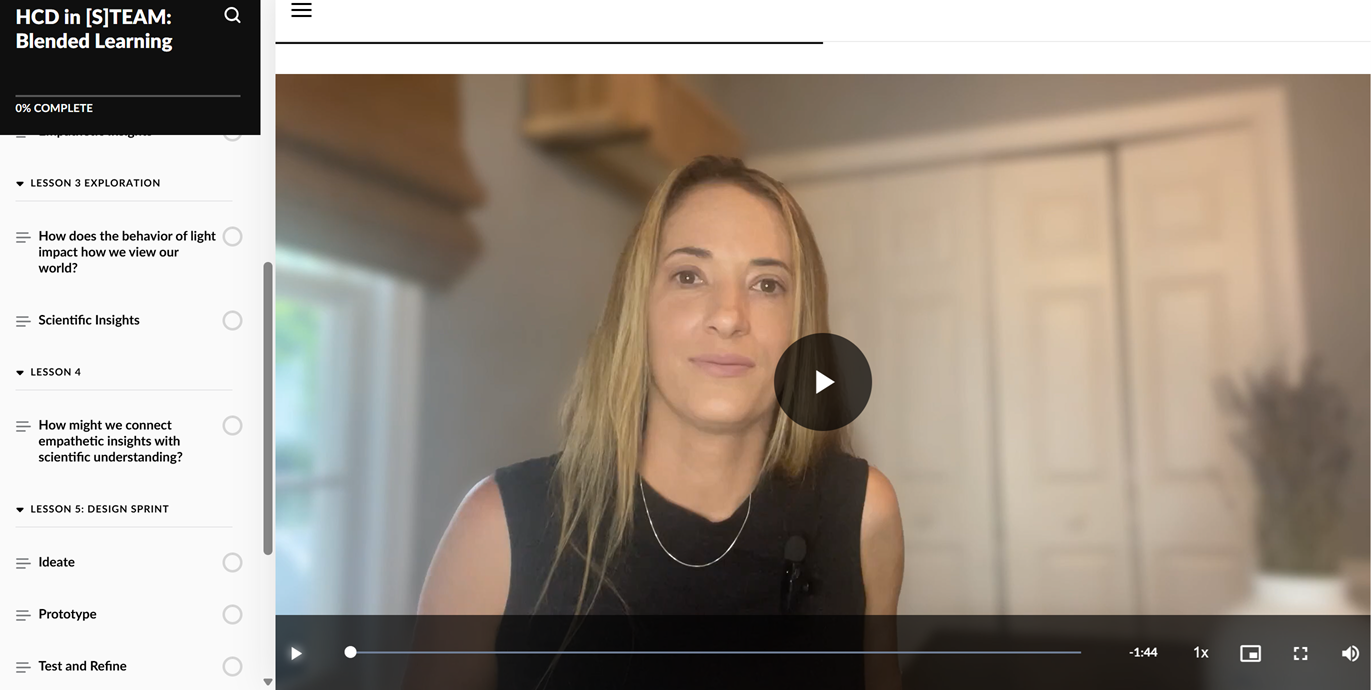
Blended Module Screenshot 1
Blended Module Screenshot 2
Problem

Blended learning often lacks seamless integration between online modules and in-person activities, limiting engagement and application.

Solution

Structured Rise 360 modules paired with scenario-based in-person exercises allow learners to apply human-centered design in authentic contexts, fostering collaboration and problem-solving.

Key Highlights
  • Design and implementation of blended learning experiences
  • Application of human-centered design in science instruction
  • Collaborative, interactive, scenario-based learning
  • Accessibility-conscious design and engagement strategies
  • Demonstrates instructional design and multimedia development skills aligned to dev job criteria

Online Stroyline Project: Empathy in the Science Classroom

Storyline Project | October 20, 2024

By Marwa Crisp

This interactive Storyline project engages K-12 teachers in the empathy phase of Design Thinking through scenario-based activities. Learners explore three empathy strategies — immersion, engagement, and observation — to better understand users’ perspectives and design solutions for inclusive science classrooms.

Learning Outcomes: Recall and apply empathy techniques, recognize user challenges, and integrate empathy-driven design into classroom practice.
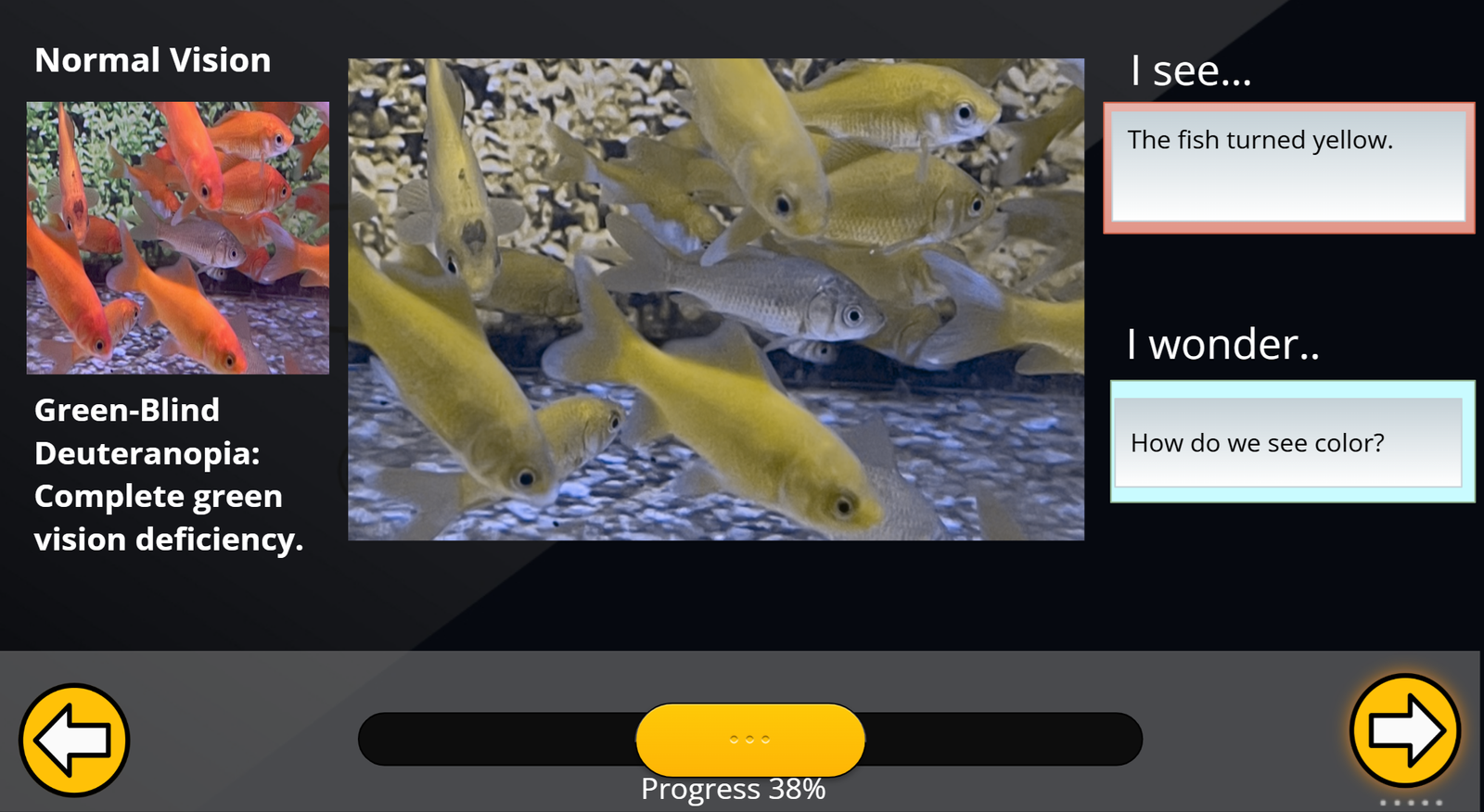
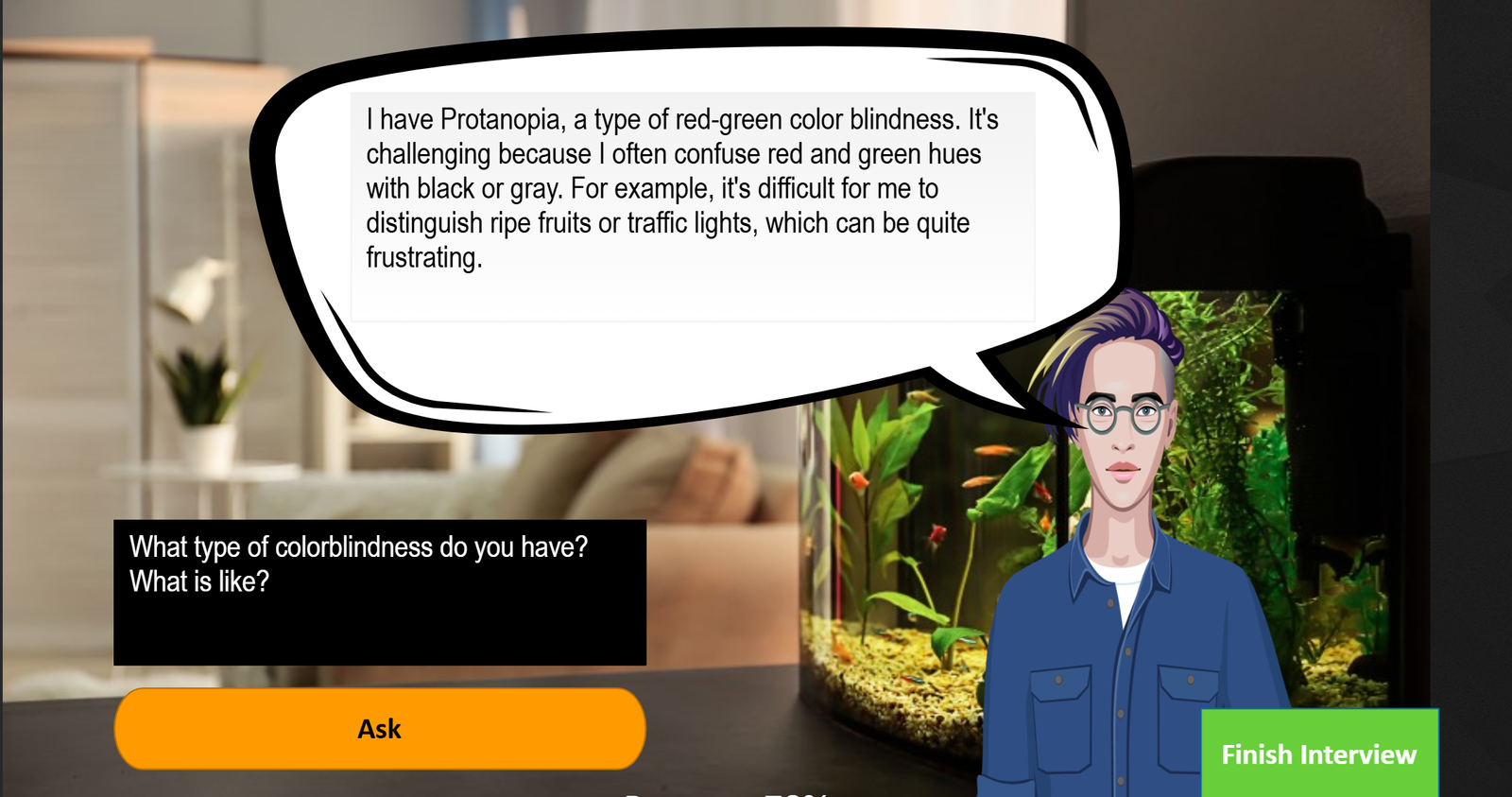
Fish Web Screenshot
Interview AI Screenshot
Problem

Teachers need strategies to build empathy for diverse learners, especially those with visual or accessibility challenges.

Solution

Scenario-based Storyline module with interactive activities highlighting immersion, engagement, and observation techniques to inform design solutions.

Highlights
  • Interactive Storyline project using AI and multimedia
  • Three empathy strategies: immersion, engagement, observation
  • Human-centered design applied to K-12 science classrooms
  • High-contrast visuals and accessibility features for inclusivity
  • Supports reflective practice and solution design in teaching

Microlearning Lesson: Supporting Understanding of Complex Science Concepts

This microlearning lesson was developed as part of a collaborative instructional design project focused on supporting students’ understanding of complex science concepts, such as photosynthesis. The segment presented here represents my individual contribution, which was designed and built in Articulate Rise.

Learners take on the role of students as they explore strategies that support English Language Learners (ELLs), including hand gestures, matching exercises, visual cues, color coding, diagramming, and annotation. The lesson’s bite-sized format, engaging visuals, and interactive activities make it practical, accessible, and transferable across STEAM classrooms.

Tools Used: Articulate Rise

Key Concepts: Microlearning, Visual Supports, English Language Learners (ELL), STEAM Instruction, Accessibility
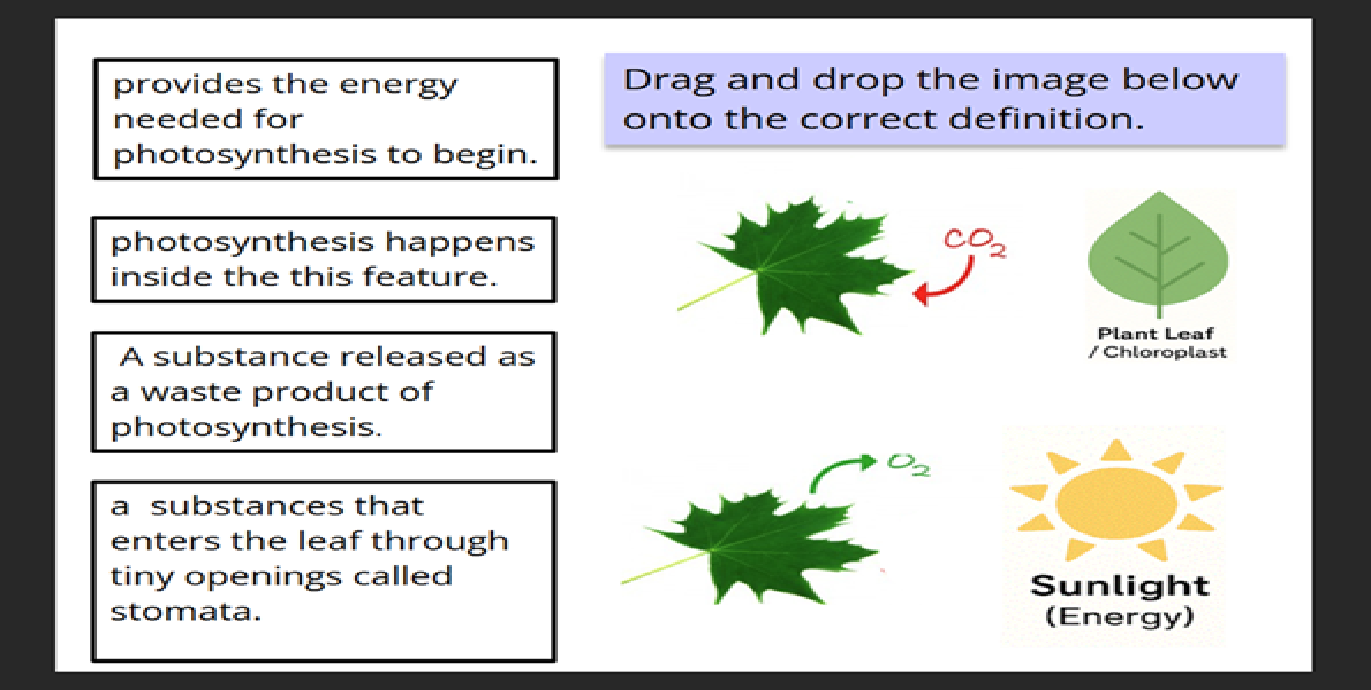
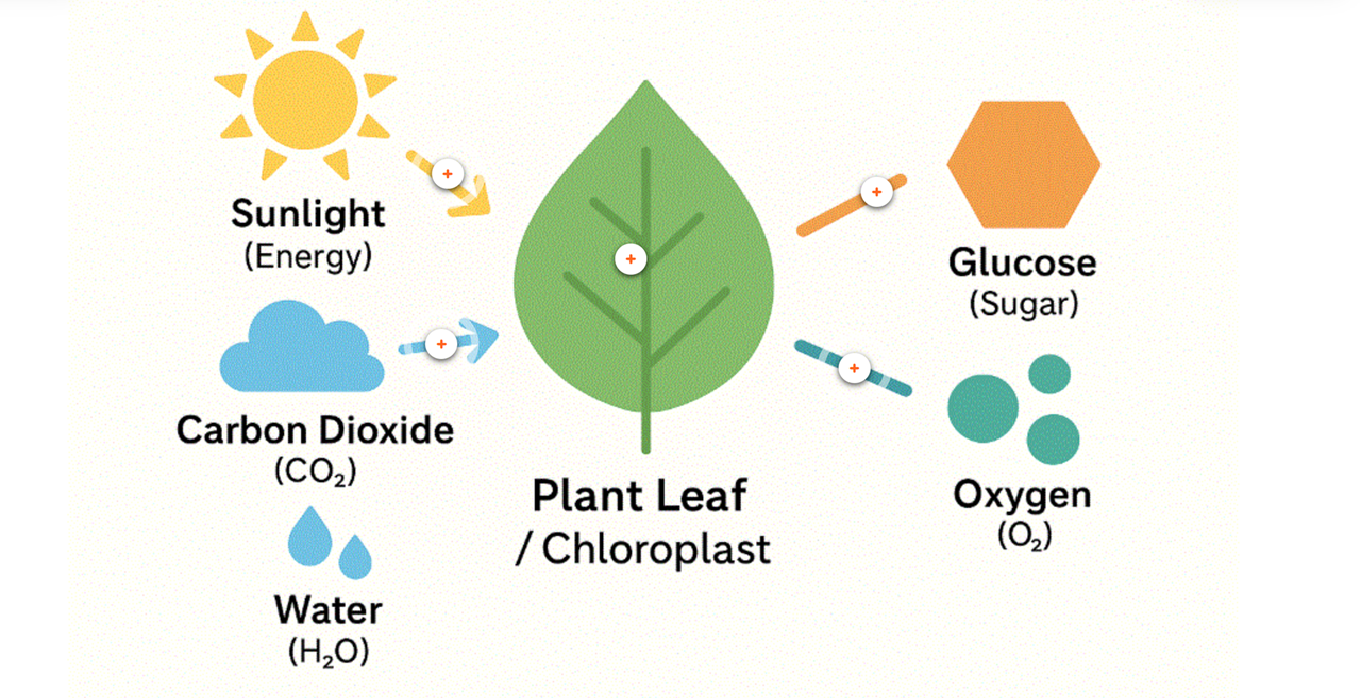
Microlearning Lesson Screenshot 1
Microlearning Lesson Screenshot 2
Problem

Students often struggle to grasp complex science concepts, especially ELL learners, without concise, interactive learning supports.

Solution

Developed a microlearning segment with visuals, interactive exercises, and scaffolded supports to enhance understanding and retention.

Highlights
  • Bite-sized lessons for accessibility and retention
  • Supports ELL learners with visual and interactive scaffolds
  • Interactive, practical, and transferable to STEAM classrooms
  • Designed in Articulate Rise for blended and online learning

Learning Management System Design: D2L Brightspace Asynchronous Lesson

This project showcases my ability to design and facilitate an asynchronous learning experience using D2L Brightspace as the Learning Management System. The lesson was built to model how educators can guide learners through rapid ideation and prototyping techniques such as associative thinking, brainstorming structures, and iterative design.

Learners progress through a carefully structured sequence of content, discussion prompts, embedded resources, and applied activities that demonstrate how LMS tools can be leveraged to support engagement, clarity, and independent learning. This project highlights my ability to translate instructional design principles into a fully functioning LMS environment for online learning.

Tools Used: D2L Brightspace (LMS)

Key Concepts: LMS Design, Asynchronous Learning, Rapid Ideation, Prototyping, Instructional Design

UPLOAD LMS SCREENSHOT HERE
(Course homepage or module layout)

Replace this entire div with your image tag.
UPLOAD LMS SCREENSHOT HERE
(Activity, discussion, or content page)

Replace this entire div with your image tag.
Problem

Many online courses place content into an LMS without intentionally designing how learners navigate, interact, and apply ideas. This often leads to passive learning and low engagement in asynchronous environments.

Solution

Designed an asynchronous lesson in D2L Brightspace that intentionally uses LMS tools (modules, discussions, embedded resources, and guided tasks) to model rapid ideation and prototyping strategies through structured learner interaction.

Highlights
  • Purposeful use of D2L Brightspace tools to guide learner flow
  • Models rapid ideation techniques such as associative thinking
  • Demonstrates how LMS structure can support instructional design goals
  • Fully asynchronous and designed for independent learner engagement
  • Translates design thinking practices into an online learning environment