Planning and Analysis

In-Person Design Srint PD: Design Document

This artifact presents the planning and analysis behind the facilitator and participant guides featured in Theme 1. It demonstrates how human-centered design principles guided the development of a professional development session for K-12 science teachers. Collaboration, reflection, and empathy are embedded throughout, and adult learning theory ensures meaningful, actionable learning experiences. AI is referenced subtly as a simulation tool for learner perspectives where appropriate.

Tools Used: Microsoft Word, Adobe PDF

Key Concepts: Human-Centered Design, Design Sprint, Instructional Design, Learner & Context Analysis, Adult Learning, Collaboration, Reflection
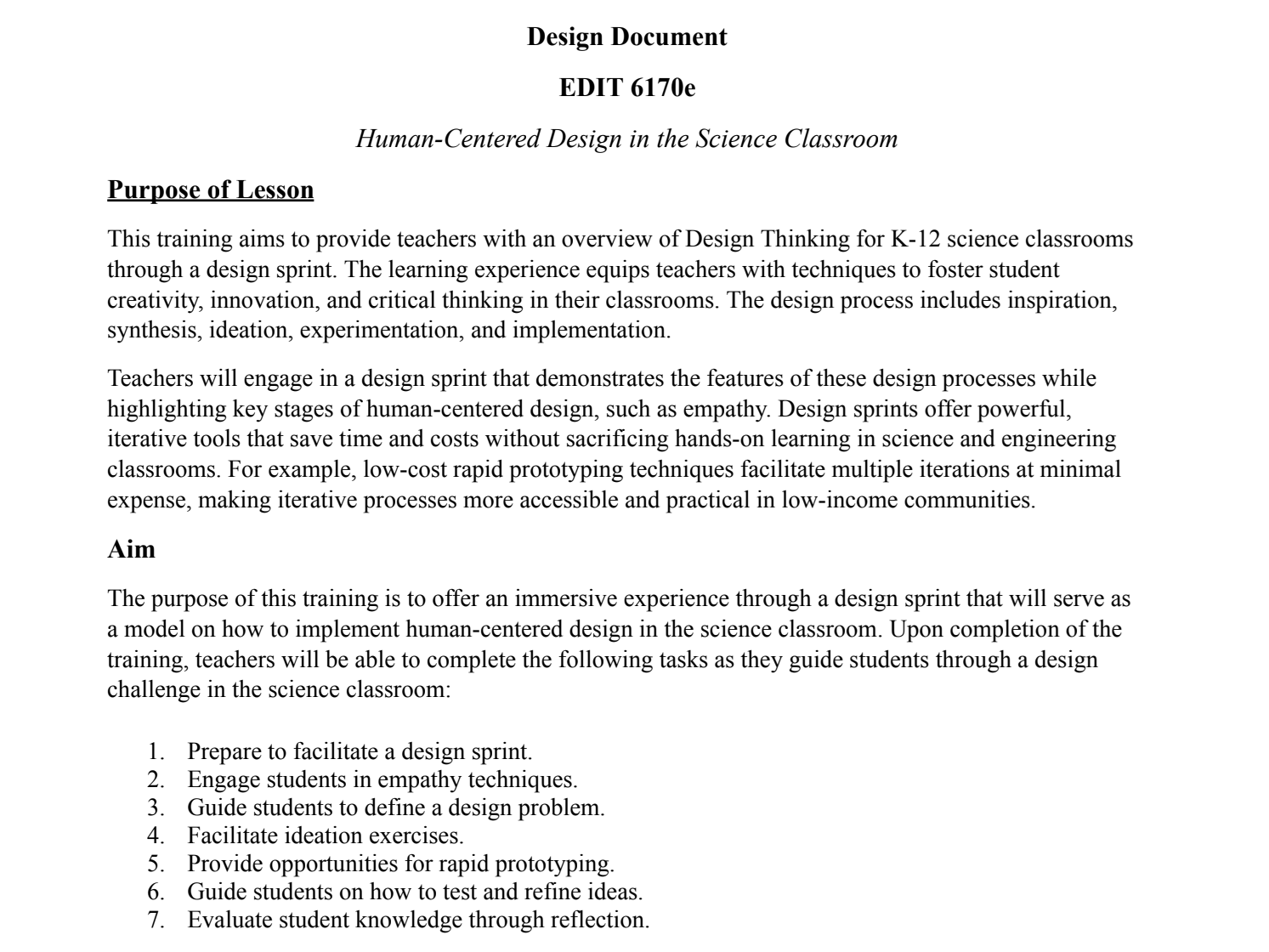
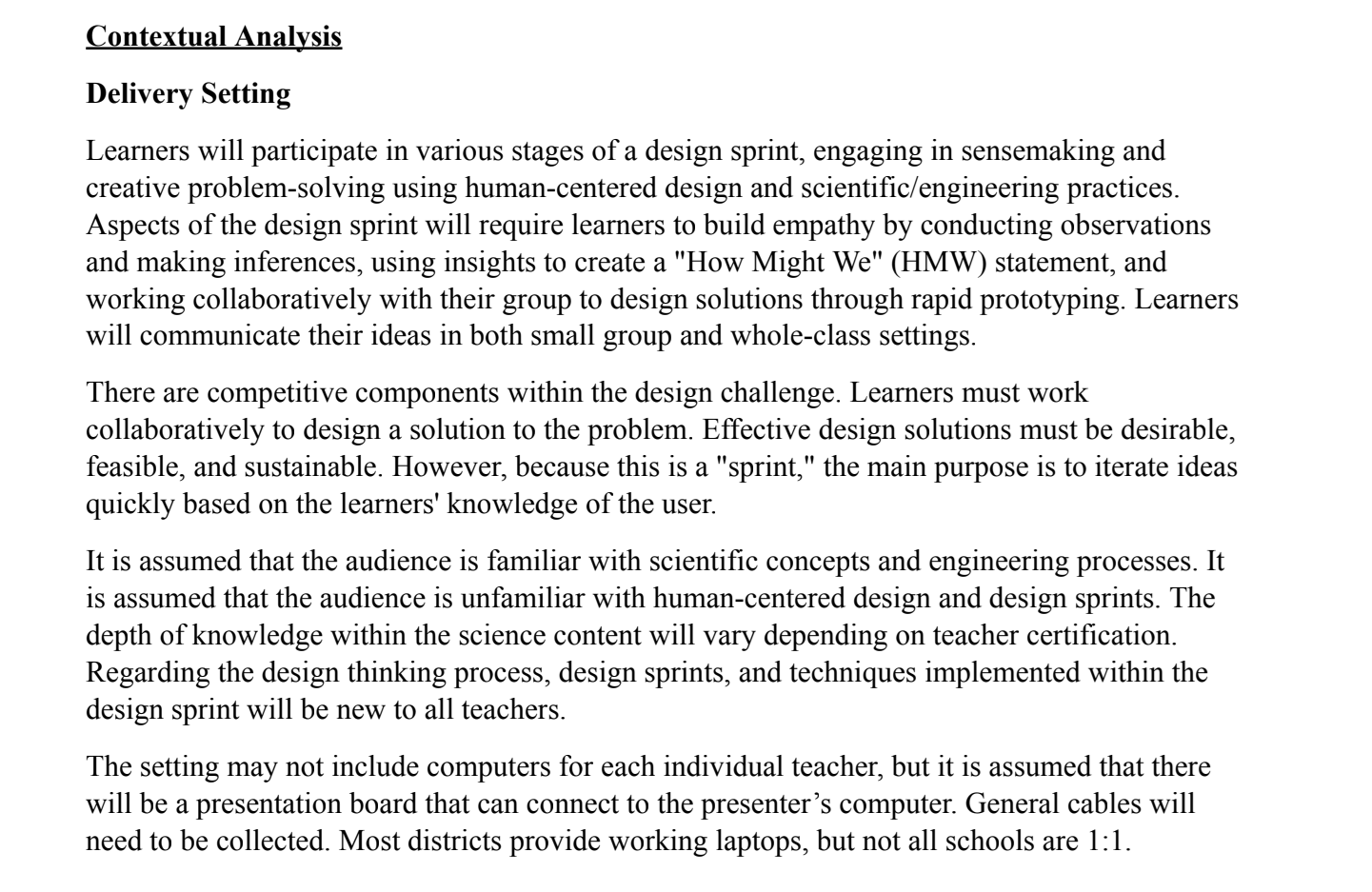
Learner Analysis Screenshot Contextual Analysis Screenshot
Problem

Teachers need structured support to design engaging, student-centered learning experiences in professional development contexts, and often lack familiarity with human-centered design and iterative design sprints.

Solution

This Design Document provides detailed planning and analysis for implementing a Design Sprint, including learner and context analysis, instructional strategies, empathy exercises, and formative/summative assessments. It models collaborative, reflective, and iterative approaches that teachers can replicate in their classrooms.

Summary & Key Highlights
  • Supports Theme 1 facilitator and participant guides, making connections explicit
  • Demonstrates planning & analysis aligned with Dev Team / development job expectations
  • Integrates adult learning theory, social learning, collaboration, and reflection
  • Models human-centered design, empathy exercises, and iterative problem-solving
  • AI referenced as a simulation tool for learner perspectives where relevant
  • Provides a scalable approach for designing in-person Design Sprints in K-12 contexts

Online Learning Using LMS: Rapid Iterations in HCD

This artifact demonstrates how I applied contextual and learner analysis to design online learning experiences within a Learning Management System (LMS). The document highlights considerations for accessibility, navigation, engagement, and assessment for adult learners.

Tools Used: Microsoft Word, Adobe PDF

Key Concepts: Online Learning, LMS, Contextual Analysis, Learner Analysis, Adult Learners, Accessibility
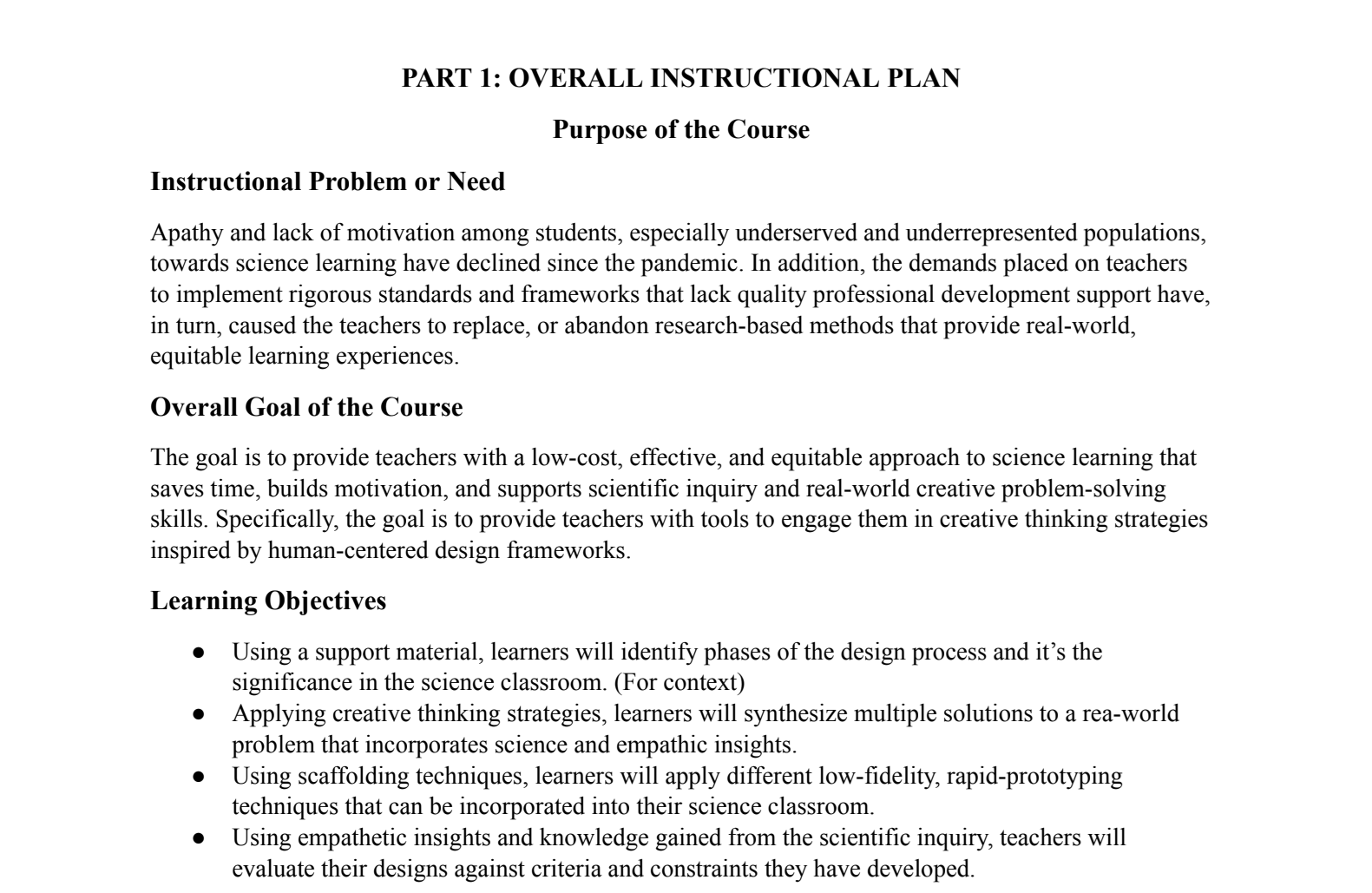
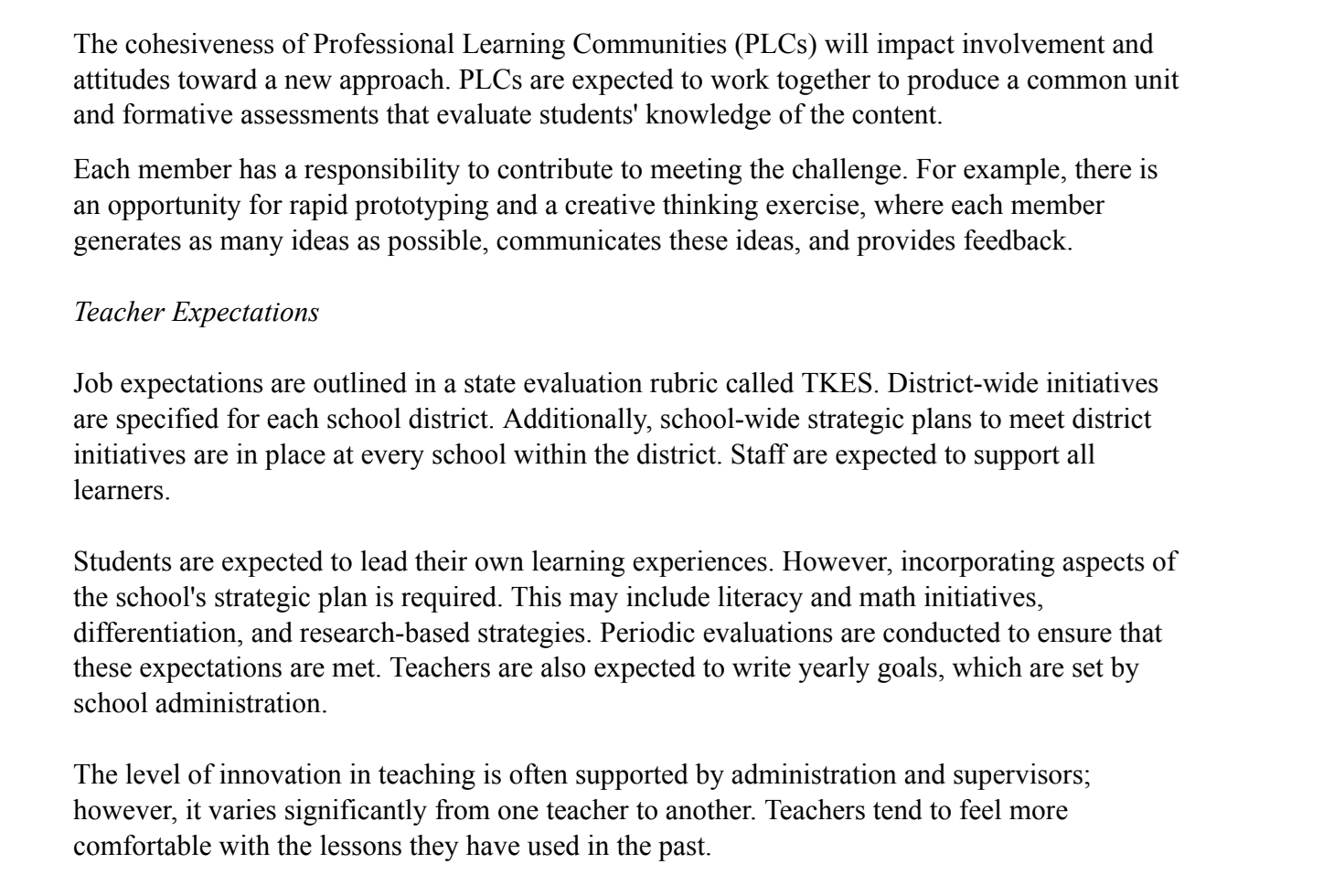
LMS Learner Analysis LMS Contextual Analysis
Problem

Teachers need structured support to design engaging, student-centered learning experiences in professional learning contexts.

Solution

This Design Sprint provides a guided framework for collaboration, learner analysis, and contextual understanding to create meaningful professional development experiences.

Summary & Key Highlights
  • Includes learner and contextual analyses to inform planning
  • Demonstrates application of adult learning and instructional design principles
  • Models collaborative, problem-based professional learning
  • Provides a scalable approach for in-person Design Sprints

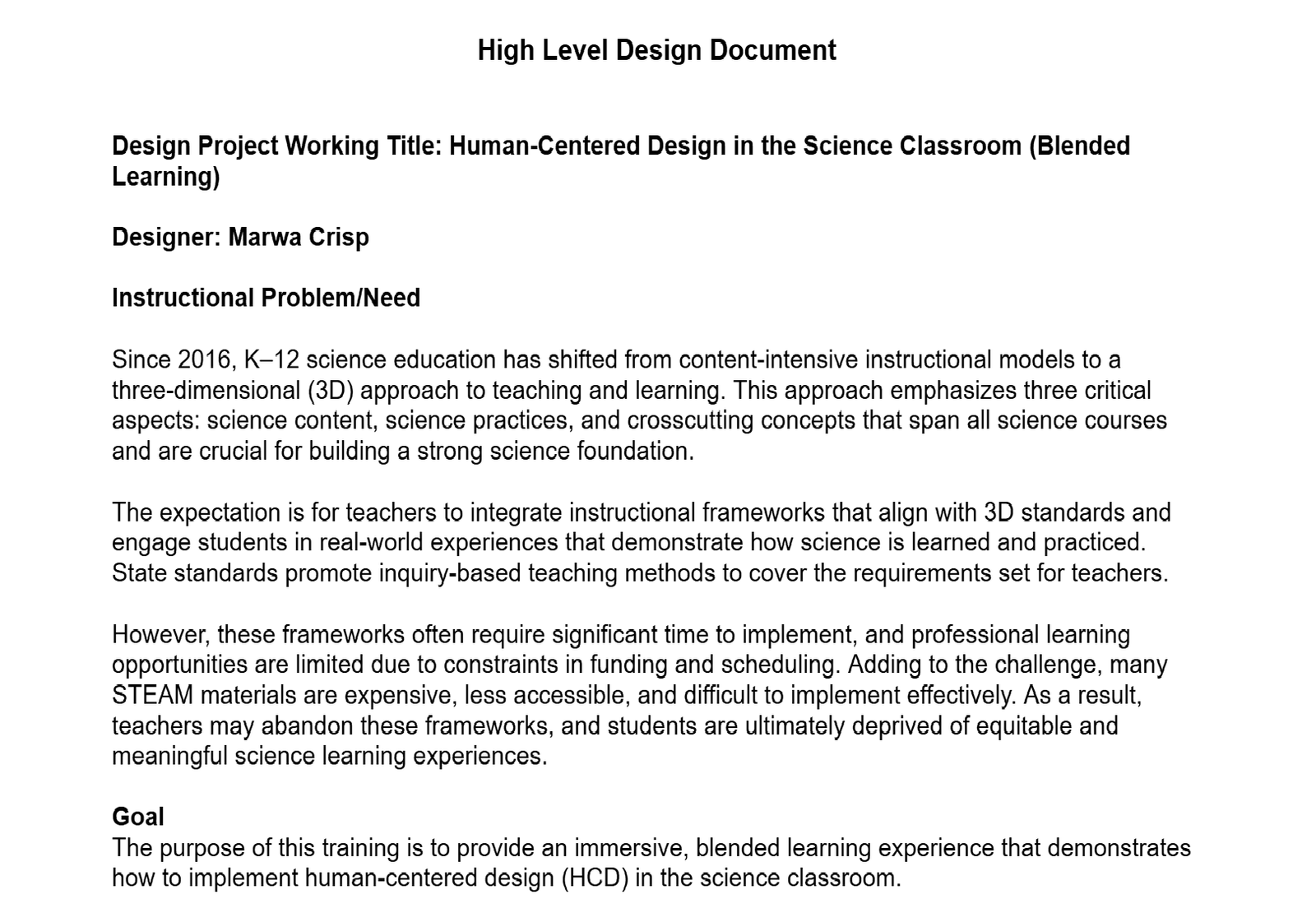
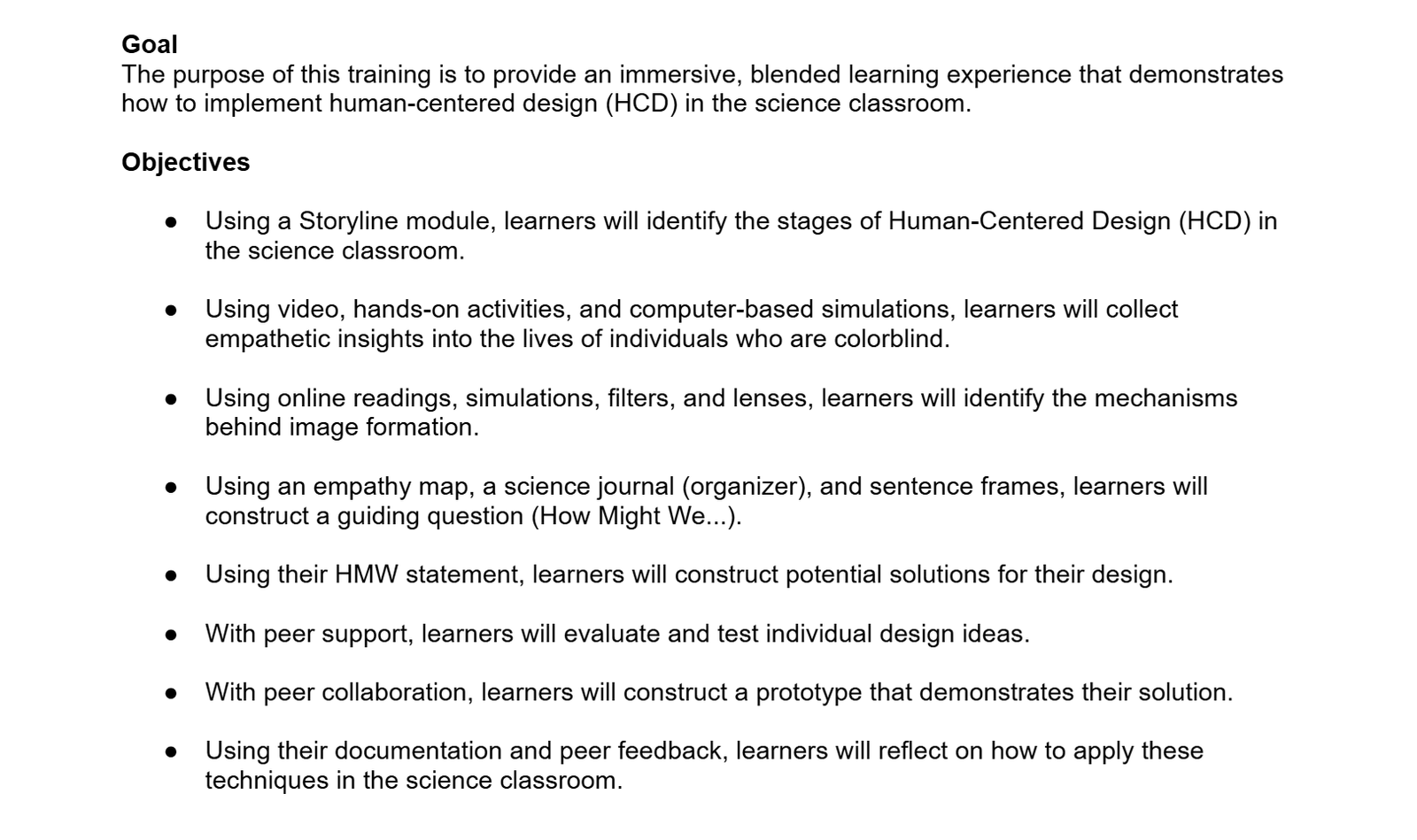
Blended Learning Design Document: Analysis Section

This Blended Learning Design Document outlines the analysis phase for the Human-Centered Design in the Science Classroom professional development course. The analysis identifies instructional needs, participant characteristics, and contextual considerations to inform the design of a blended learning experience.

Designer: Marwa Crisp

Project Focus: Human-Centered Design, Blended Learning, 3D Science Instruction, STEAM Integration

Key Goals: Identify instructional challenges, analyze learner needs, and establish design objectives for an accessible and engaging blended learning experience.
Blended Learning Icon 1 Blended Learning Icon 2
Instructional Problem / Need

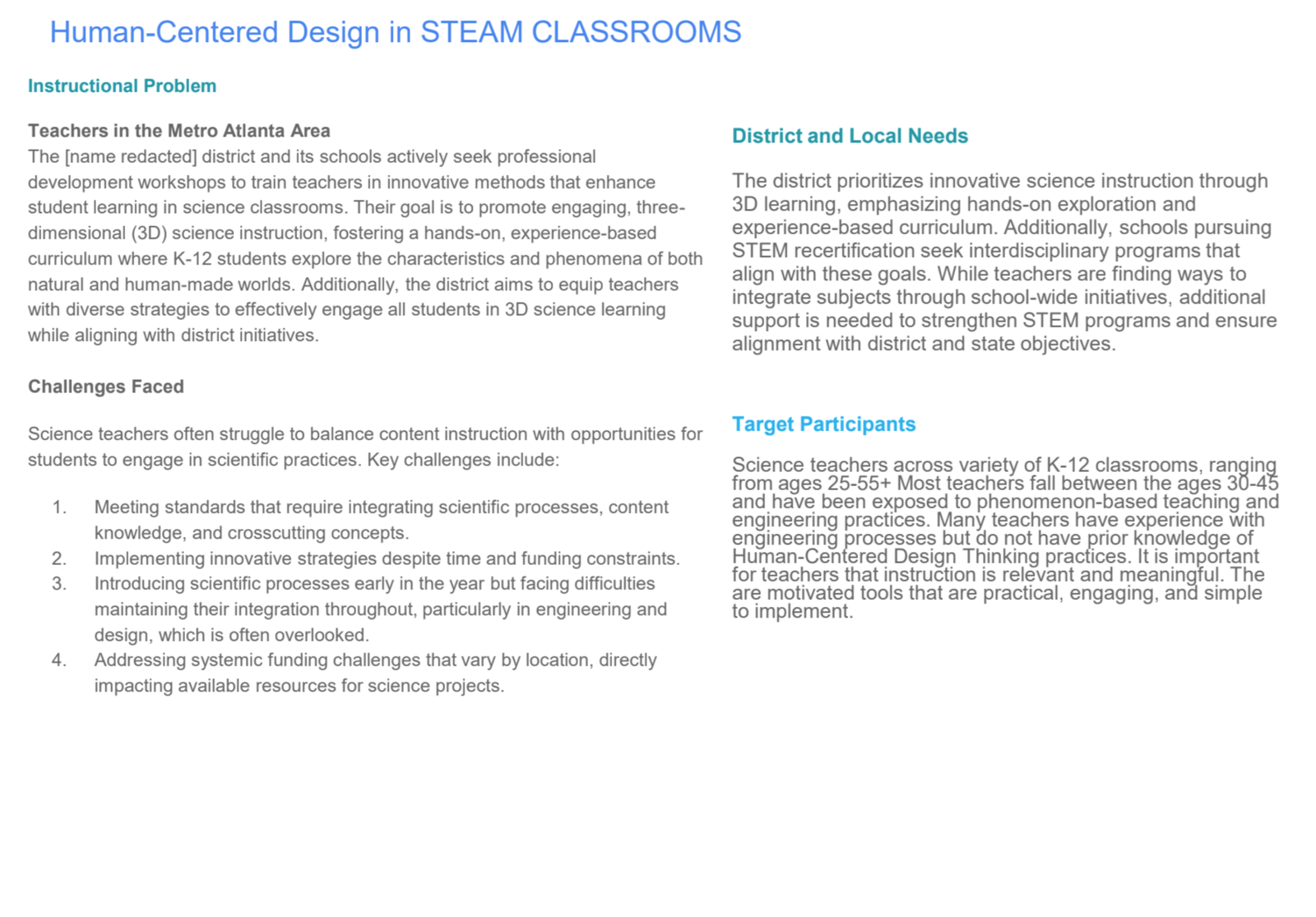
Teachers require practical, time-efficient strategies to integrate three-dimensional science instruction into their classrooms while addressing diverse student needs, district expectations, and resource limitations. Current frameworks are often time-consuming and expensive, limiting access to meaningful learning experiences.

Participant Analysis

Target participants are grades 4–12 teachers, including science coordinators, typically aged 26–55, with prior knowledge of 3D science standards, inquiry-based methods, and engineering practices. Participants vary in experience, technological proficiency, and access to resources.

Learning Environment & Context

Instruction occurs in classrooms or media centers with access to computers, projectors, Articulate Storyline, and Articulate Rise. Tables are arranged in clusters to support collaboration. Materials include digital and hardcopy resources, design kits, and facilitator guidance.

Motivations & Constraints

Teachers’ engagement depends on relevance, credibility of facilitators, time availability, and applicability to their classrooms. The program emphasizes accessibility, shared goals, and practical strategies that support differentiated learning.

Design Goals & Objectives
  • Analyze instructional needs and participant characteristics
  • Apply human-centered design principles in a blended learning framework
  • Incorporate Universal Design for Learning, choice, and voice to increase accessibility
  • Provide tools for metacognition and reflection
  • Develop real-world learning experiences in science
Key Highlights
  • Research-informed design addressing both digital and in-person learning
  • Blended learning strategies to maximize engagement and accessibility
  • Formative and summative assessments embedded throughout
  • Structured scaffolding of activities from analysis through evaluation
  • Supports equity and diverse learner needs in STEAM education

Online Storyline Learning Module: Human-Centered Design in STEAM Classrooms

This online, self-paced Storyline learning module was designed to support a school-based STEAM initiative by modeling how teachers can implement human-centered design through a structured design sprint. The experience addresses district and school needs for three-dimensional (3D) science instruction, interdisciplinary learning, and accessible design practices.

Client: School-based STEAM Initiative (STEM Recertification Support)

Tools Used: Articulate Storyline, Storyboarding, Visual Prototyping, Limited AI-Supported Scenarios

Key Focus: Human-Centered Design, STEAM Integration, Online Professional Learning, Design Sprints
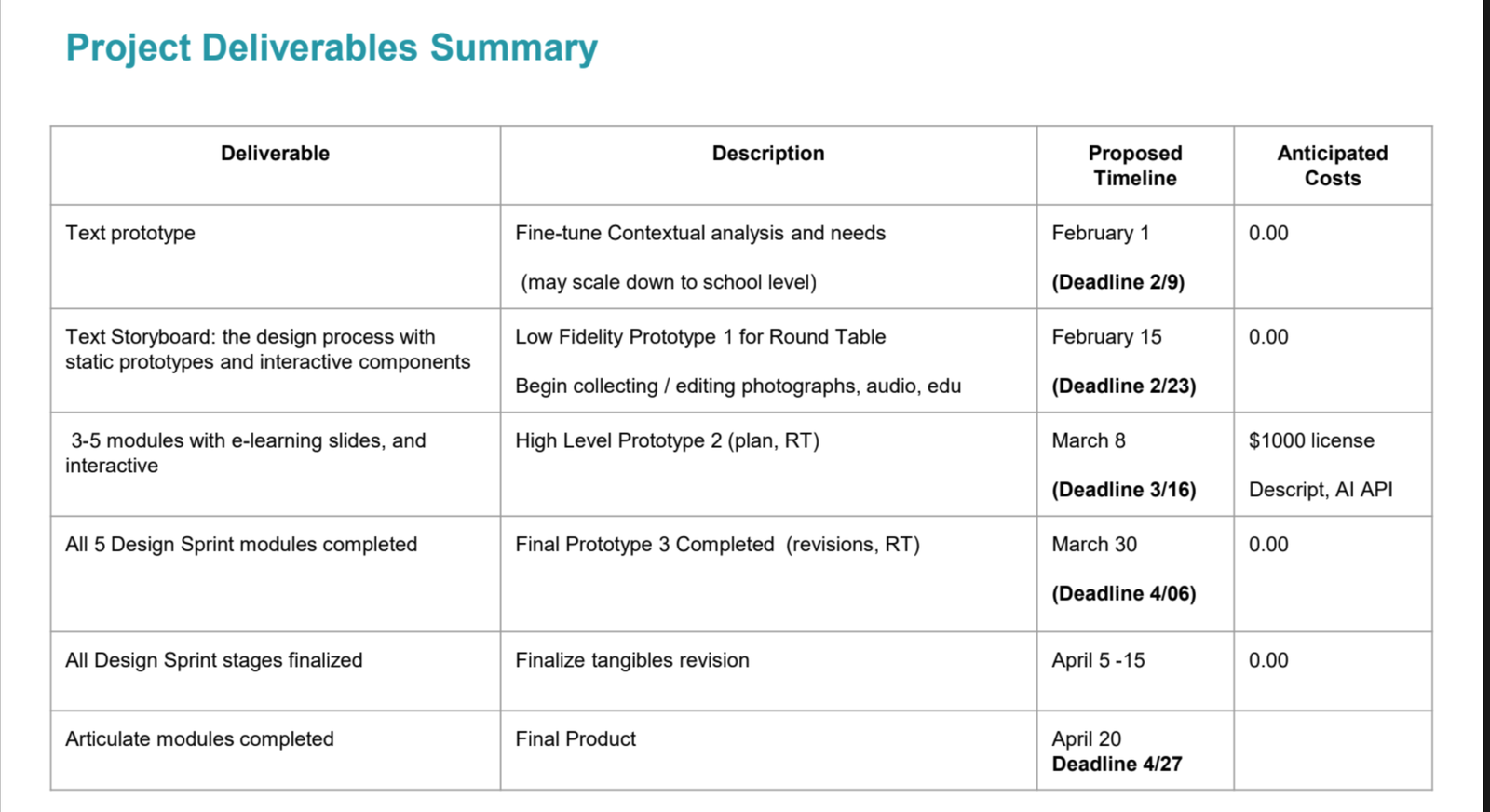
Storyline Planning Icon
Storyline Design Planning Icon
Instructional Problem

Science teachers need practical, time-efficient ways to integrate engineering and design practices into 3D science instruction while meeting district initiatives and resource constraints.

Design Solution

A modular, online Storyline experience that guides teachers through a human-centered design sprint, modeling empathy, ideation, prototyping, and evaluation strategies they can directly apply in STEAM classrooms.

Key Highlights
  • Client-driven instructional design for a real school context
  • Clear alignment to 3D science and STEAM initiatives
  • Scaffolded modules with low cognitive load
  • Storyboarding and prototyping informed by needs analysis
  • Supports STEM recertification and interdisciplinary goals