Designing for Mastery: Interactive Frameworks for STEM Accreditation
This rationale documents the instructional design decisions behind an interactive Storyline 360 learning experience that operationalizes the Authentic Human-Centered Design (HCD) framework. The module was designed to model an entire HCD lifecycle through systems thinking, AI-mediated empathy interviews, and authentic decision-making aligned to real instructional contexts.
Introduction & Learner Navigation
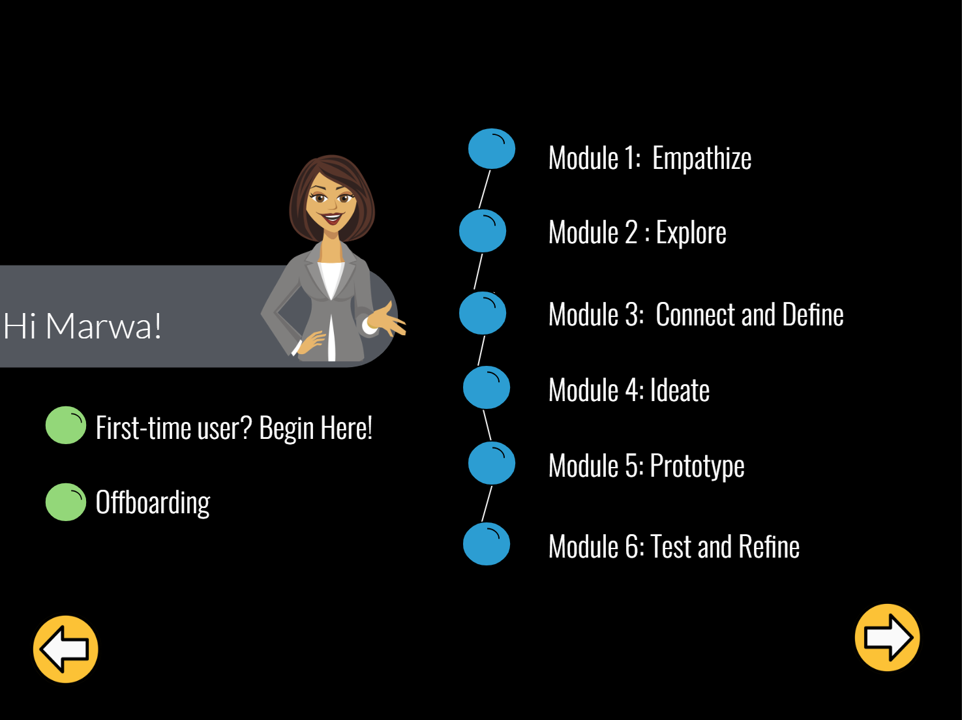
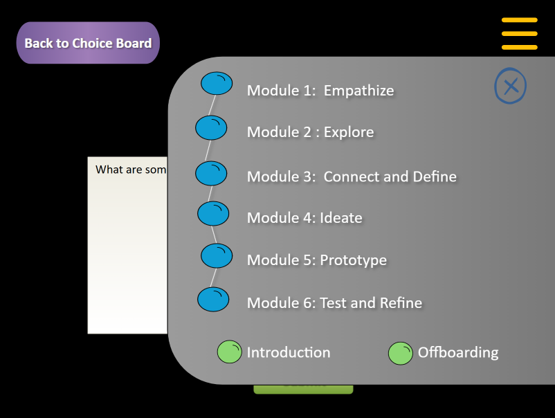
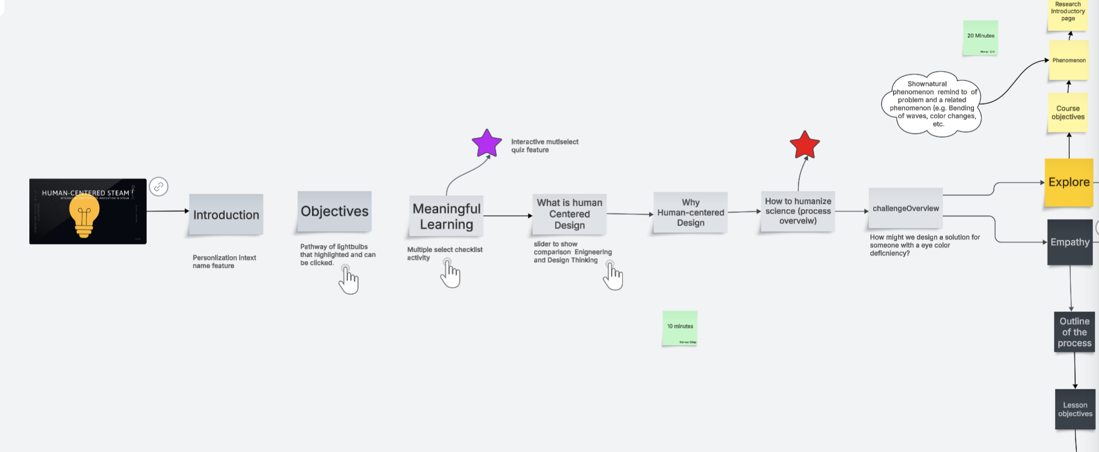
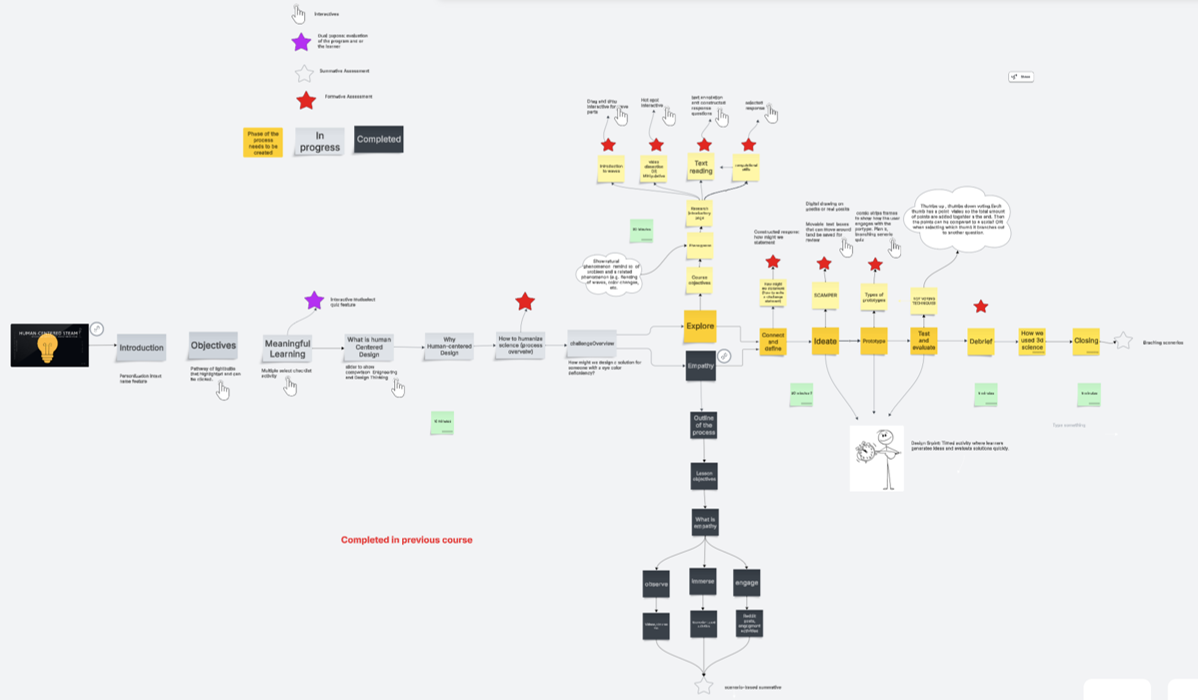
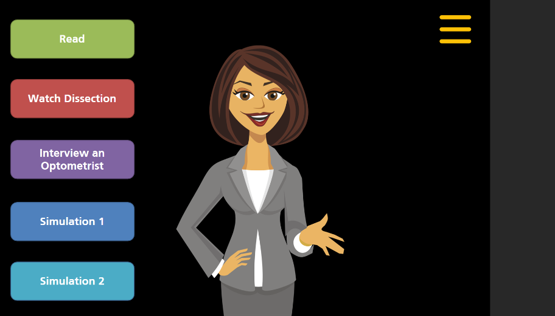
The experience opens with intentional learner-centered navigation that supports autonomy, psychological safety, and non-linear exploration. Persistent navigation allows learners to move freely between phases of the HCD framework, reinforcing the iterative nature of design thinking rather than a rigid, linear progression. Learners are greeted by name to establish personal relevance and reduce affective barriers to engagement.
Needs Analysis & Systems Thinking
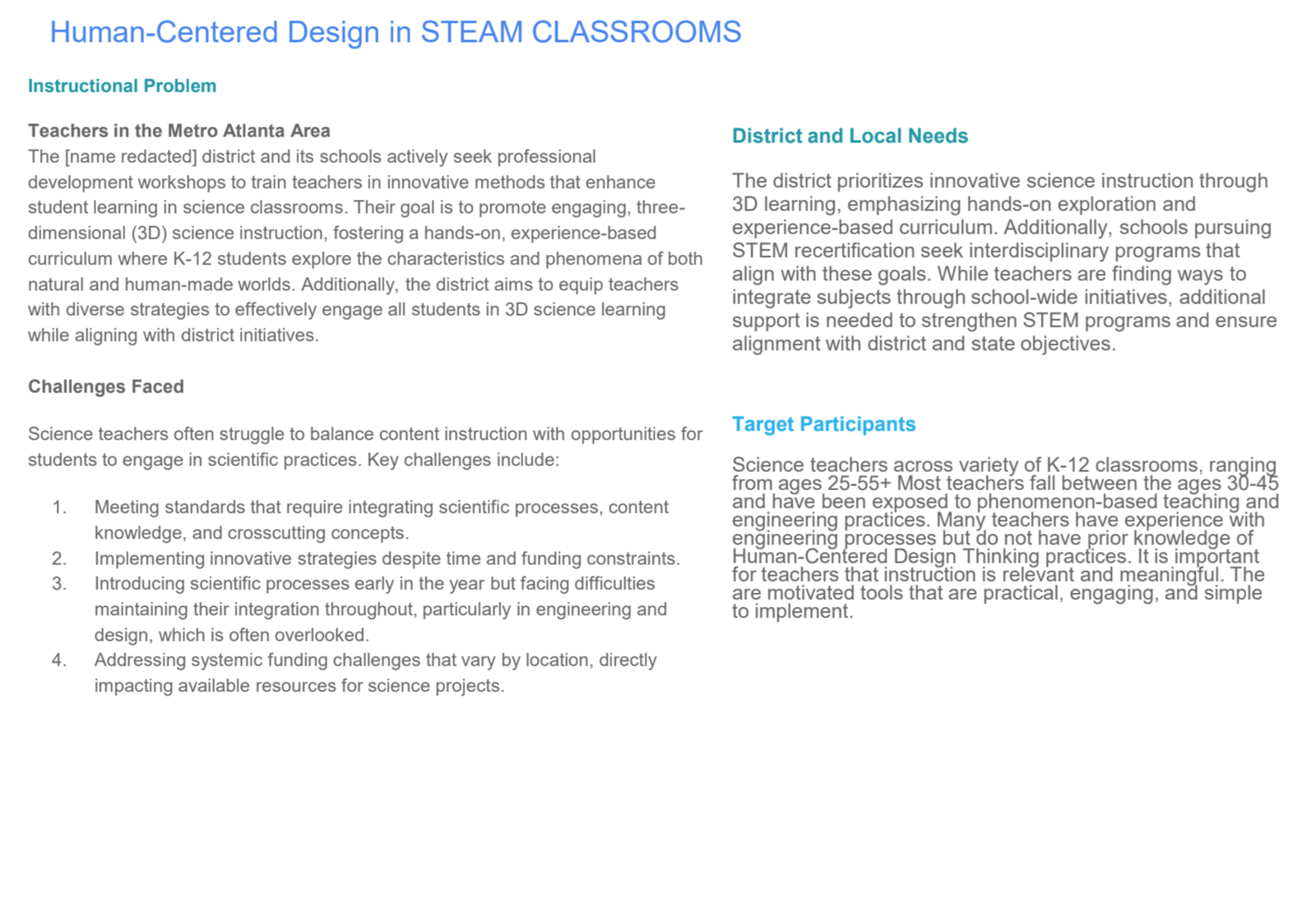
The design was informed by a needs analysis that accounted for educator certification requirements, instructional time constraints, and cognitive load. Systems thinking guided alignment across learning objectives, stakeholder needs, and instructional interactions. Rather than isolating content knowledge, the design intentionally situates learning within the broader instructional ecosystem teachers navigate daily.
Wireframing & Rapid Iteration
Low-fidelity wireframes were used to test interaction flow, learner choice points, and cognitive demand prior to development. This rapid iteration phase reduced development risk and ensured alignment with Universal Design for Learning (UDL) principles before committing to high-fidelity production.
Framework Operationalization & AI Integration
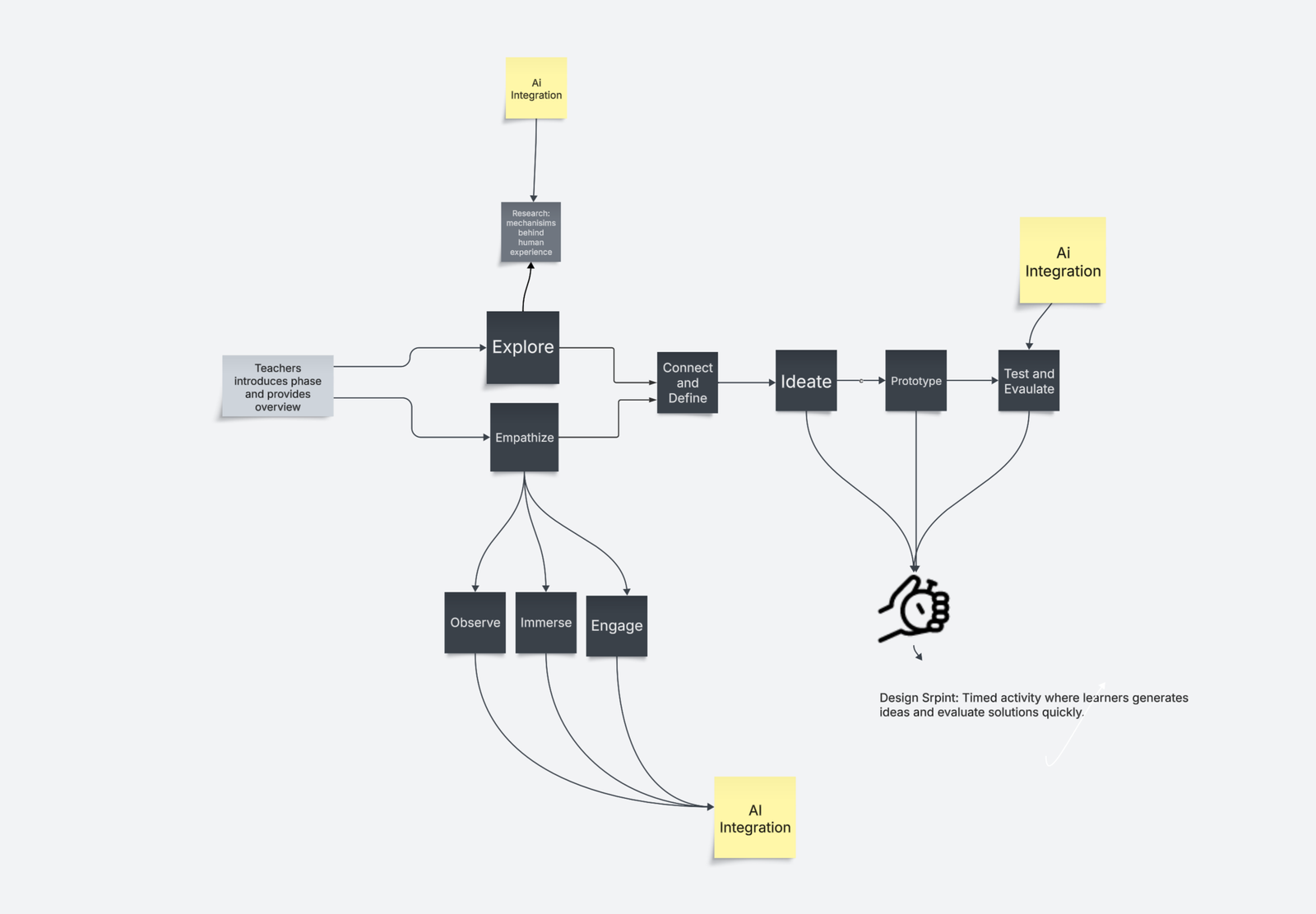
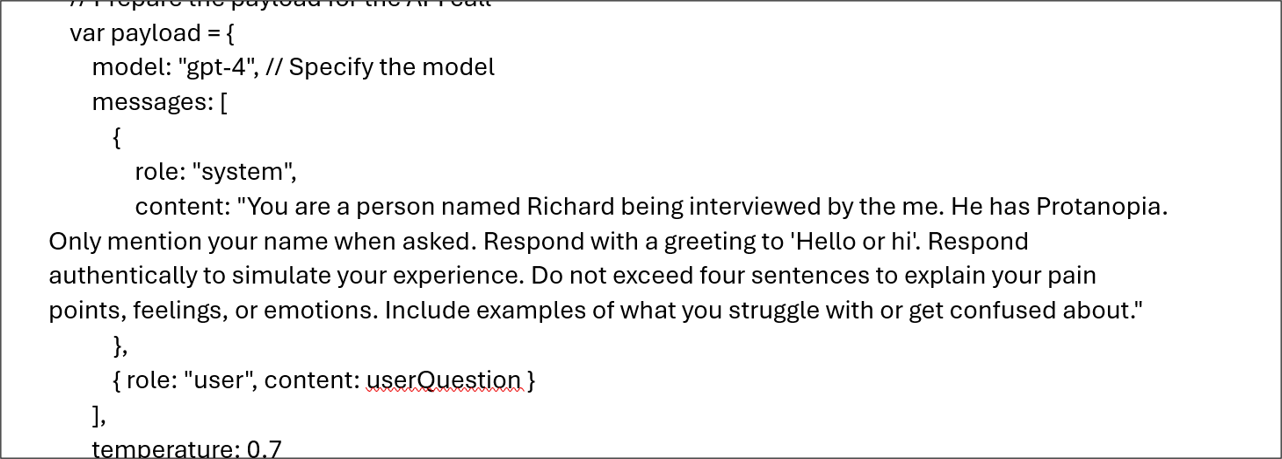
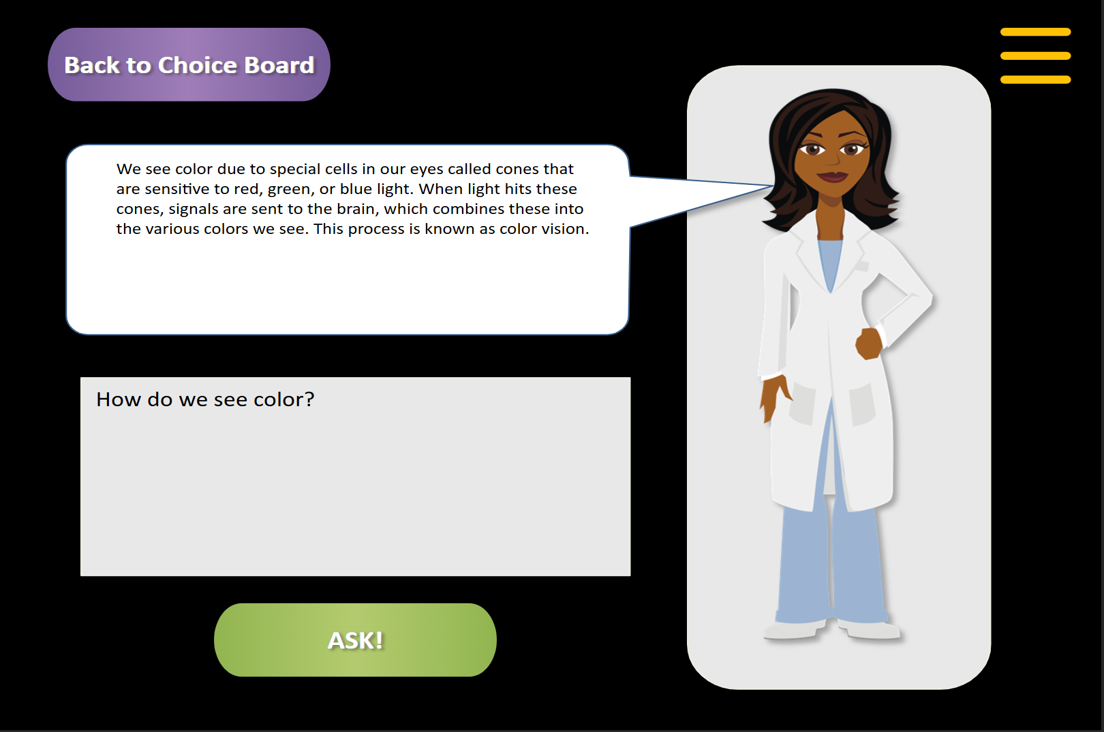
AI-mediated interviews were integrated to simulate authentic users and provide a safe, repeatable environment for practicing empathy and evidence-based decision-making. These interactions operationalize the empathy phase of the HCD framework while allowing learners to test assumptions, refine questions, and reflect on bias within a structured system.

Exploration, Choice, & Applied Learning
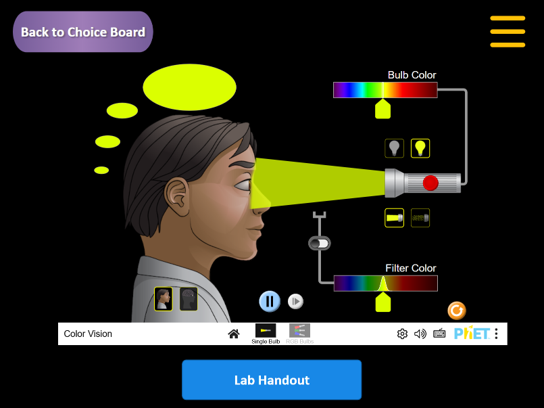
Learners engage in structured exploration through interdisciplinary pathways that include simulations, AI interviews, and applied science tasks. A guided choice board supports autonomy while maintaining instructional coherence, allowing learners to pursue relevance without increasing extraneous cognitive load.
Iteration, Reflection, & Metacognition
Iteration is supported through structured reflection, formative feedback, and participant guides that encourage metacognitive awareness. Learners document decision-making, evaluate trade-offs, and refine solutions—mirroring the authentic cycles required in both design thinking and scientific inquiry.